Swimming Pools
Gunite pools · Guide
Pebble pool finish compared with plaster, quartz, and tile
Every gunite pool ends with a choice most homeowners have never had to make before: what the water will actually touch. This guide compares the finish families that go over the cured shell of a concrete pool installation, from classic plaster to pebble aggregate and tile.
A pebble pool finish is a cement-based interior surface where small rounded stones form most of the face, giving a gunite pool a natural-stone look that a finish manufacturer ranks above plaster and quartz for fade resistance.
Gunite pool finishes: plaster, quartz, pebble and tile
Gunite pool finishes fall into a handful of families, plaster, quartz aggregate, pebble aggregate and tile, each applied by hand over the cured shell after the waterline tile and coping are set. Unlike the gelcoat on a factory fiberglass shell, this surface is chosen by the owner. Plaster is the traditional white or pigmented cement finish, troweled smooth. Quartz-aggregate finishes blend crushed quartz into the plaster for color and hardness. Pebble-aggregate finishes set small rounded stones in the cement binder for a textured, natural surface. Tile covers the entire interior in glass, porcelain or ceramic and is the most design-flexible of the group.
They share a single job, sealing and beautifying the concrete beneath them, and differ in nearly everything else: feel underfoot, how color holds up, how they respond to pool chemistry, and how long the surface goes before renewal. A finish is renewed over the life of a concrete pool; the shell beneath it is not, so the finish is the part of the pool that gets chosen more than once.
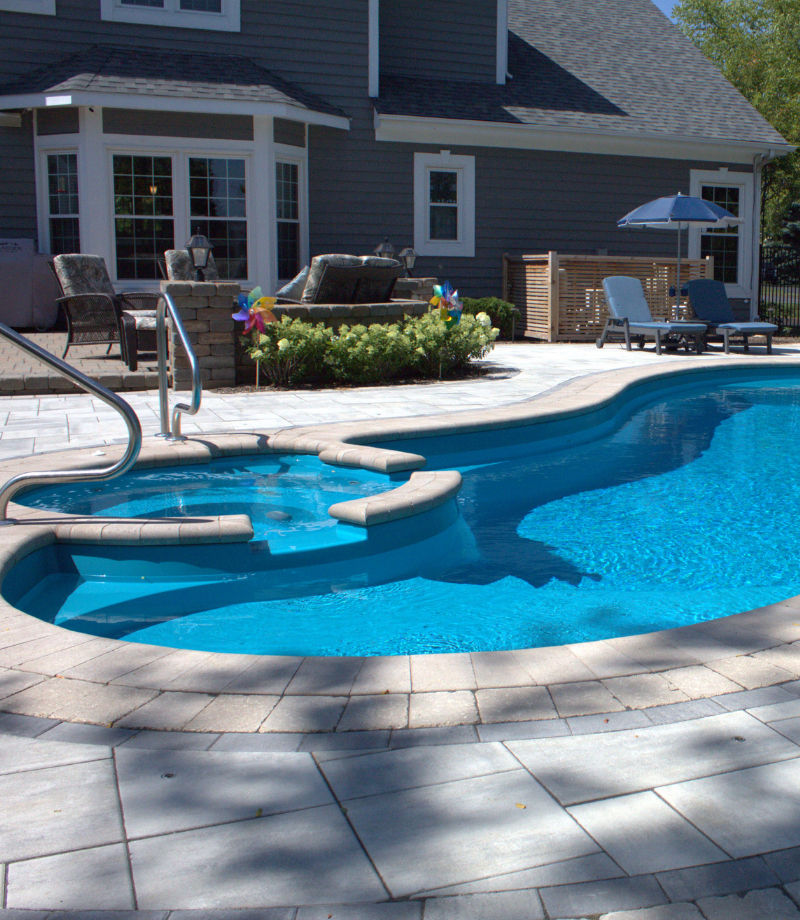
Swimming pool pebble finish colors: mini pebble and micro pebble blends
A pebble finish takes its color from the stones themselves plus the pigment in the cement binder, and the blends run from larger exposed pebble through mini pebble to micro pebble, each smoother underfoot than the last. Because stone does not fade the way cement pigment does, the color tends to hold: light blends read as pale turquoise, mid-tone blends as blue-green, and dark charcoal or navy blends as deep, reflective color, and a blend looks different once the pool is filled, so samples belong wet and in daylight rather than on a showroom wall.
Underneath the color, a pebble finish is a cement-based plaster in which small, smooth aggregate stones make up much of the surface, so the floor and walls read as natural stone rather than painted cement. The crew trowels the mix on by hand, then washes or lightly polishes it before it sets so the pebbles stand slightly proud of the cement. Larger exposed pebble gives the most texture and the most natural look; mini pebble softens that; micro pebble, often polished, feels closest to a smooth plaster while keeping the durability of the stone.
The trade-offs are texture and cost. Some swimmers find larger pebble rough on feet and knees, which is why the finer blends exist, and each finish family carries its own price line; ask the installer for current pricing on each finish for a specific project rather than assuming an order.
Quartz pool finish vs pebble aggregate: which wears better?
Pebble aggregate holds its color better than quartz, and quartz better than plain plaster, the fade-resistance ranking that SGM, a pool-finish materials manufacturer, sets out for the plaster-based families. SGM (2026) notes that plaster's color comes from cement and pigment that break down under ultraviolet light and chemistry, which is why plain plaster sits lowest, quartz in between and pebble highest.
Wear shows up differently on each, and the honest way to compare them is to ask the installer the same questions about every finish: where it sits on their price list, how it responds when the water chemistry drifts, and what they have seen fade or etch on local pools. Plaster is the smooth, traditional cement finish; quartz blends a quartz aggregate into the plaster; pebble exposes the stone at the surface and, in SGM's ranking, resists fading best of the three plaster-based finishes; tile is a fully custom surface with grout lines that need their own care.
Lifespans are the other question to put to the installer, because the year figures vary too widely by source, by pool chemistry and by how the finish was cured and started up to state a range or an order here; ask what has held up on local pools, and which finish the installer warrants and for how long, rather than relying on a national band.
- Plaster: smooth, classic, the traditional cement finish
- Quartz aggregate: smooth with flecks of color blended into the plaster
- Pebble aggregate: textured natural-stone look, highest fade resistance in SGM's ranking
- Tile: fully custom look, grout that needs care, priced per project
How Illinois winters change the surface conversation
Illinois winters push the finish choice toward a surface that tolerates the waterline's yearly cycle of wet, dry and frozen, because that band is where a finish in the Chicago suburbs is worked hardest. Freeze-thaw cycling is a factor Illinois builds account for in finish and shell planning; which family resists it best is not settled in published sources, so treat any blanket ranking with caution and ask the installer what has held up locally.
What can be said plainly is how a finish is started and cured. In The Swim attributes most plaster-surface shrinkage cracking, the fine crazing that shows as a web of hairlines, to insufficient curing time or letting the surface dry out in hot weather, which means a finish applied late in a hot summer, then filled and balanced correctly, matters as much as the material. A new finish also needs its first winter handled carefully: the closing routine is a question for whoever winterizes the pool, and it is worth asking what coverage applies to the selected finish before it goes on.
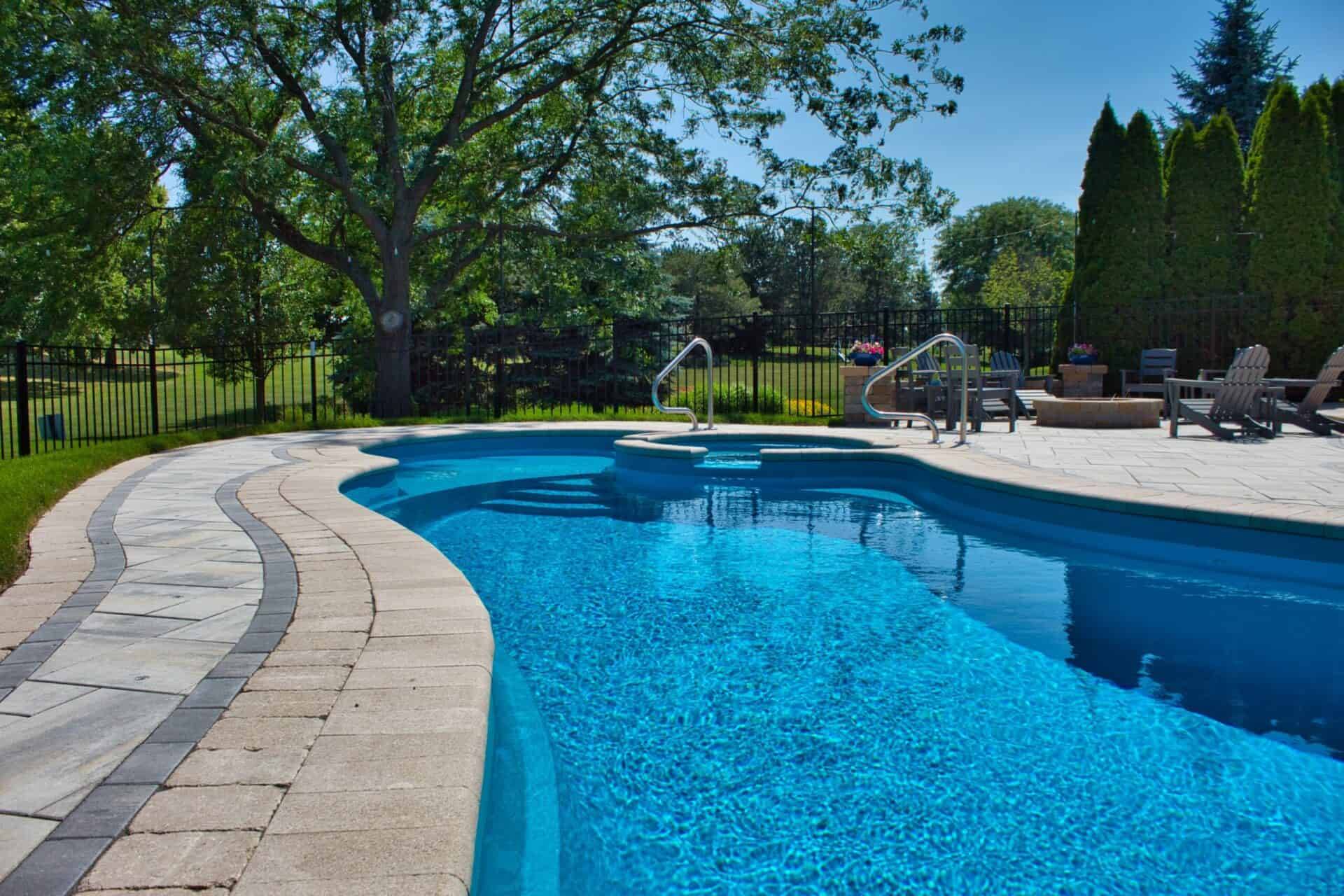
Why the surface gets chosen alongside the deck and coping
The surface gets chosen alongside the deck and coping because it is never seen alone: it is read through the water, next to the waterline tile, against the coping stone and the deck material. A finish decision made in isolation often looks wrong in the yard. Light plaster reads pale blue in sunlight; darker pebble blends turn the water deep teal or navy and tend to look cooler and more reflective; quartz can be tuned between the two. The coping stone, the deck material, the waterline tile and the surrounding planting all shift how the color lands, so pool builders typically choose the interior finish, tile and deck together, with the same finish carried into an attached spa so the two read as one. That is why the finish is among the last physical steps but among the earliest design decisions.
Matching the surface to a custom concrete build
Matching the surface to a specific build means choosing it with the shell, tile, coping and deck decisions in front of you: a dark pebble blend where the owner wants deep water color against stone coping, a fine polished pebble where children will use the steps and benches, quartz where a smooth feel and flecked color suit a classic rectangle, and plain plaster where budget leads and earlier resurfacing is accepted. A tanning ledge, a raised spa wall or a long lap lane shows the finish over more surface and in more light, which favors blends that hide chemistry marks and read well from the house.
A finish can also only be as good as the shell under it: a shell cured with patience, tile and coping set to clean lines, and a start-up handled correctly give any finish, plaster or pebble or tile, its best chance to run its full life. That is the decision the installation page is about: it explains how a custom concrete pool is designed for a specific yard, how the build is sequenced, and what a consultation with Wave Outdoors Pools covers; the finish conversation happens inside that larger one, with samples in hand.
Sources: SGM (2026); In The Swim
Ready to plan the pool under the finish?
The installation page explains how Wave Outdoors Pools approaches a custom gunite build and what a consultation covers.