Swimming Pools
Gunite pools · Guide
Gunite pool design: the features only a custom concrete shell allows
A gunite pool is the one kind of pool that starts as a blank page rather than a catalog. This guide explains the design freedom gunite pool builders work with, from freeform curves and vanishing edges to sun shelves and attached spas, and what actually decides which of those fit a given yard.
Gunite pool design starts from a drawing rather than a mold: the shell is sprayed onto steel bent to the plan, so freeform curves, vanishing edges, sun shelves and attached spas are possible wherever the site and engineering allow.
Why a gunite shell is not limited to a mold
A gunite shell has no mold at all: the pool's geometry is set by a steel rebar cage that crews bend and tie in the excavated hole, and the concrete is sprayed onto that steel until it reaches its designed thickness. Whatever the steel can be bent to, the shell becomes.
That is the practical root of the design freedom people associate with concrete pools. River Pools' fiberglass overview (updated 2025) explains that fiberglass pools are pre-molded, so a buyer chooses from a manufacturer's catalog rather than designing a form from scratch. A gunite pool is the opposite: the drawing comes first and the pool is built to it.
Design freedom is also depth freedom: because the floor is sprayed to the contours the steel defines, a gunite pool can step from a wading shelf to a deep end in whatever profile the standards allow. Poolonomics (2021) offers activity-based depth guidance, and diving depth in particular still has to meet the governing standard and local plan review.
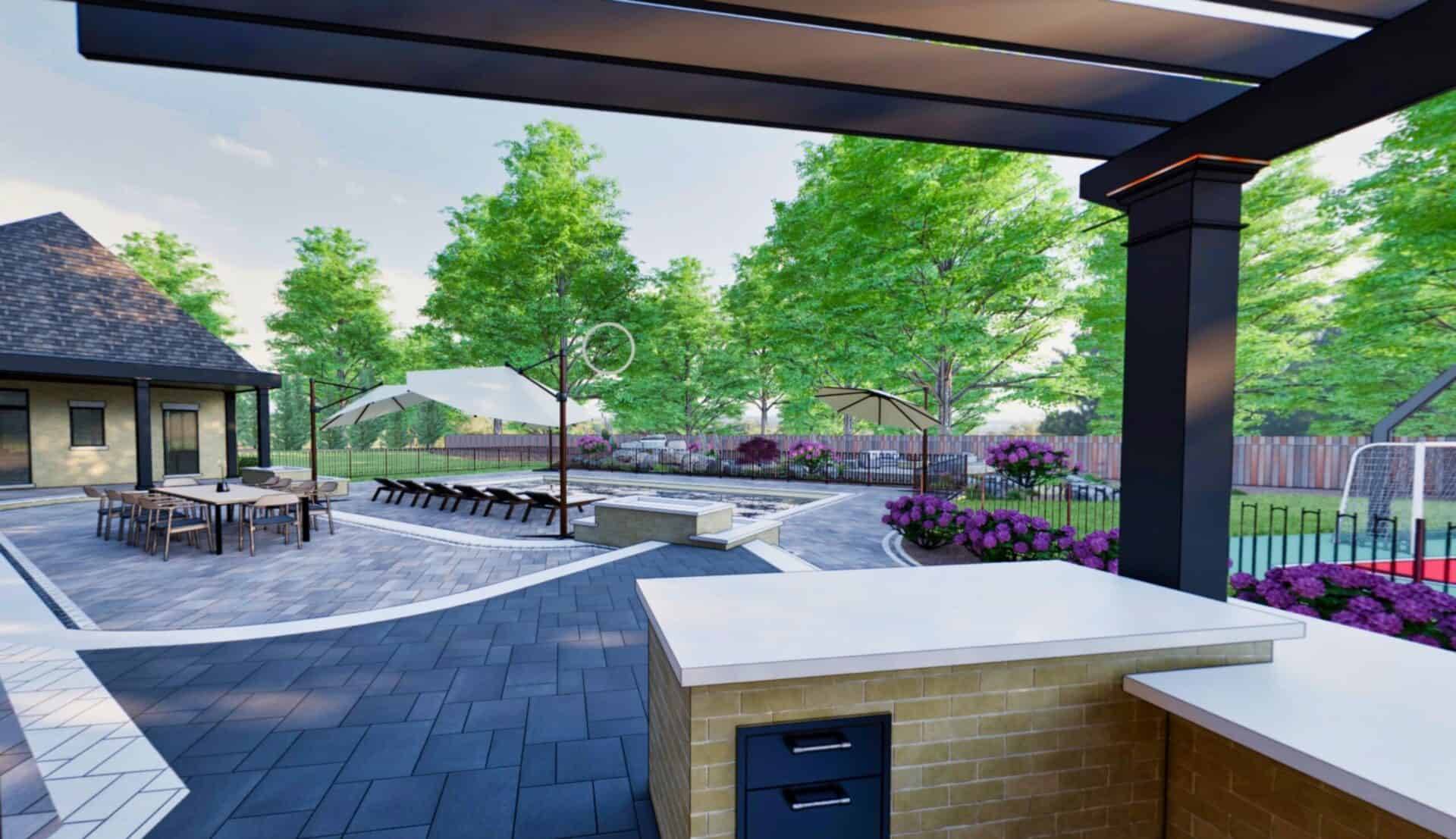
Custom gunite pool shapes: freeform, rectangle and small yard designs
Custom gunite pool shapes divide into freeform outlines, softly geometric plans and true rectangles, and the lot usually decides which fits. A freeform outline works when the planting and the deck can follow its curves and the yard has room to let it breathe; a rectangle suits a modern house, a lap-swimming owner or a narrow lot, and it makes the deck, the cover and the coping simpler to detail. A softly geometric plan, a rectangle with a radiused corner or a bumped-out end, is the middle ground most suburban yards end up in.
Small yard designs are where a custom shell earns its keep. A manufactured shell has to fit the lot as it comes; a drawn shell can be narrowed at the setback, lengthened along the fence line, or given a shallow lane on the sunny side. The better small designs pick a single strong outline and a few features rather than a crowded pool with a thin deck, because every feature adds steel, concrete, plumbing and equipment and takes deck space the family will use more than the water.
A rectangle gunite pool with tanning ledge, beach entry or attached spa
A tanning ledge, a beach entry and an attached spa are the features that most often turn a plain rectangle into a custom gunite pool, and each is formed in the same steel and concrete as the shell. A tanning ledge, also called a sun shelf, is a broad shallow platform for lounging in a few inches of water, and River Pools' tanning ledge guide recommends a ledge depth of nine to twelve inches. In a rectangle it usually runs across the shallow end or down the sunny side, often with an umbrella sleeve set into it.
A beach entry replaces the steps with a floor that slopes up to deck level like a shoreline, so a child, a grandparent or a dog can walk in. It needs length, because a gentle slope takes more floor than a stair, so it suits longer rectangles and freeform plans better than compact pools. An attached spa is raised or flush, built into the same shell and usually spilling over a dam wall into the pool so the two read as a single structure; ask the installer how a spillover would be engineered for a specific site, since published guidance varies by builder.
What a vanishing edge actually requires
A vanishing edge requires a wall built dead level and slightly below the waterline, a hidden catch basin sized to hold the surge when swimmers get in, a pump and plumbing to return the overflow, and a structural design for a wall holding water on its inner face and open air on the outer. The effect, also called an infinity or negative edge, is that the pool overflows its chosen side and appears to end in the air; on a sloped lot with a view it is the signature feature of a custom concrete pool.
It is only possible because the shell can be sprayed to a wall that is an overflow lip on the inside and a finished face on the outside. The catch basin below the edge is a smaller pool in its own right, and the hydraulics, the basin size, the pump and the structure of that wall are engineering questions, which is why a vanishing edge belongs in the design and engineering stage rather than in a later change order. On flat suburban lots the same idea often appears as a perimeter-overflow edge or a spillway into a lower basin; ask the installer what is realistic for a specific site.
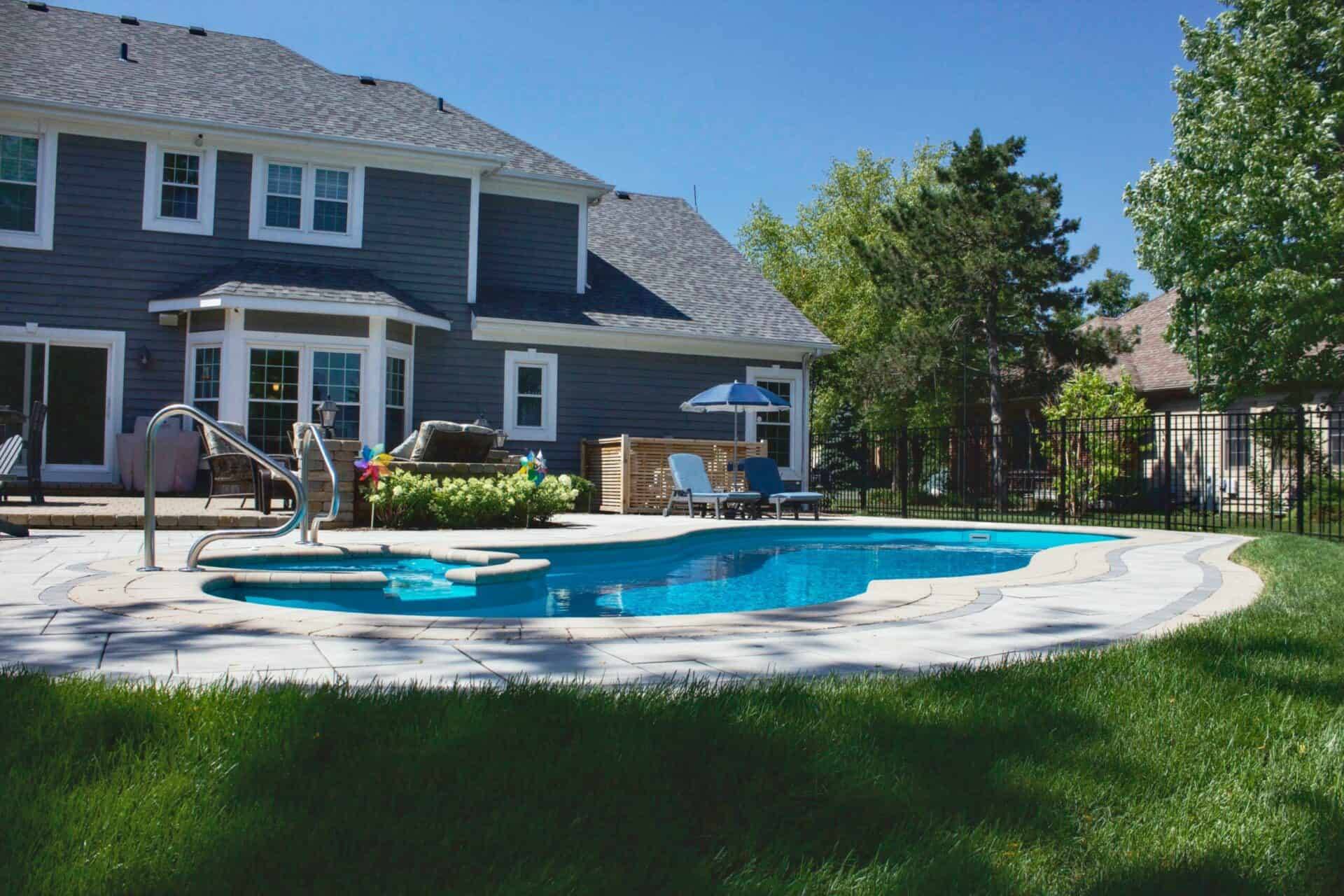
A drawn shell vs a catalog shell: speed against freedom
A catalog fiberglass shell is faster to install and comes in proven forms, while a drawn gunite shell gives the freedom to change length, depth profile, step position and every curve radius to suit the yard. HomeAdvisor's national planning ranges put fiberglass installation at two to four weeks after permits, against three to six months for concrete, and for many yards a catalog form is exactly right. Wave's own planning guidance is narrower and measures a different span: its concrete construction phase typically runs six to eight weeks after approvals and site readiness, with design, engineering and permitting counted separately, so the national figure and the Wave phase are not the same clock. What the fiberglass shell cannot do is change: its dimensions are fixed at the factory.
A gunite pool trades that speed for freedom. It is built to the drawing, so the drawing can respond to the lot line, the view, the house and the way the owners live: a long shallow lane for lap swimming, a raised spa where the sightline from the kitchen lands, a deep end for the teenager who dives. The question is not which is better in the abstract but whether a specific yard and family are better served by a fixed form or a drawn one.
How site conditions and engineering shape the final design
Lot size, setbacks, easements, the slope of the yard, storm drainage, soil type, frost depth, utility runs and excavator access set the limits of a design before any feature is discussed. A vanishing edge needs grade; a deep end needs soil that will hold a deeper cut; a beach entry needs length.
Wave Outdoors Pools' design process includes an extensive property and site assessment, and engineers and architects are involved when project conditions call for it; they are brought in as conditions require rather than included in every scope. That is the pattern to expect from any serious builder: the more unusual the geometry, the more the structural drawings matter, and a homeowner is right to ask who is doing the engineering and what it covers. Village permitting then reviews the plan, the barrier and the setbacks before any steel is bent.
A drawing becomes a pool through the sequence a gunite build follows: the outline is painted on the lawn, the hole is dug to the profile, the steel is bent to the curves with the plumbing inside it, the shell is sprayed and cured, and the tile, coping, deck and finish follow. Every design decision lands somewhere in that sequence, so the freedom is real only when the build is engineered and executed as carefully as the sketch. That is the standard to hold pool builders to, and it is what the installation page is about: how a custom concrete pool is designed for a particular site, how engineering and permitting are coordinated, and what a consultation with Wave Outdoors Pools covers when a homeowner arrives with a drawing or just a yard and a few ideas.
Sources: River Pools (fiberglass overview, updated 2025); River Pools (tanning ledge guide); Poolonomics (2021); HomeAdvisor (national inground pool guide)
Ready to design a gunite pool for your yard?
The installation page explains how Wave Outdoors Pools turns a design idea into a buildable custom concrete pool and what the first consultation covers.