Swimming Pools
Gunite pools · Guide
Why gunite pools crack, and how the build is designed to prevent it
Almost every gunite pool shows a hairline somewhere, and most of them are harmless, which is exactly why homeowners need to know which kind they are looking at. This guide explains why a shell cracks and what the concrete pool building services behind a well-built pool do to prevent the kind that does matter.
Gunite pool cracks are usually shallow shrinkage hairlines from curing rather than structural failures, while a crack that runs through the shell signals leak risk and traces to soil movement, rebar placement, mix quality or a rushed cure.
Why do gunite pools crack? Shrinkage cracks vs structural cracks
Gunite pools crack either because the concrete shrinks as it cures, which leaves shallow surface hairlines, or because something moved or overloaded the shell, which leaves a structural crack that passes through it. Shrinkage cracks appear as fine hairlines, sometimes in a web pattern the trade calls crazing, and they form as the concrete gives up moisture and contracts during curing. PoolPro Magazine (2020, updated 2025) reports that most shrinkage cracks do not extend through the structure when enough steel is present, and In The Swim describes most pool cracks as minor shrinkage crazing, affecting under one percent of pools, usually from a cure that was too short or too dry.
How to tell if a pool crack is structural before any repair
A structural crack is wider and deeper than a shrinkage hairline, and In The Swim notes that a crack wide enough to fit a dime into may run all the way through the shell, recommending a dye test at the crack to check for active leaking. PoolPro adds that structural cracks should never occur in a properly built shell and that when they do they raise water-intrusion and corrosion concerns for the steel inside. A homeowner noticing a crack should start there: hairline and surface-only, or wide and through, which makes it a repair question rather than a cosmetic one.
Concrete pool crack repair: epoxy injection, structural repair and cost
Repair follows the diagnosis. Surface crazing in a plaster finish is generally cosmetic and is dealt with when the finish is renewed; a structural crack is opened, cleaned and injected with epoxy or polyurethane, sometimes with carbon-fiber staples across it, and a crack that keeps returning points to a soil or drainage cause that has to be corrected before any patch holds. Cost depends on length, depth, cause and whether the pool has to be drained, so a figure only means something after an assessment of the specific crack.
What causes shrinkage cracking during curing
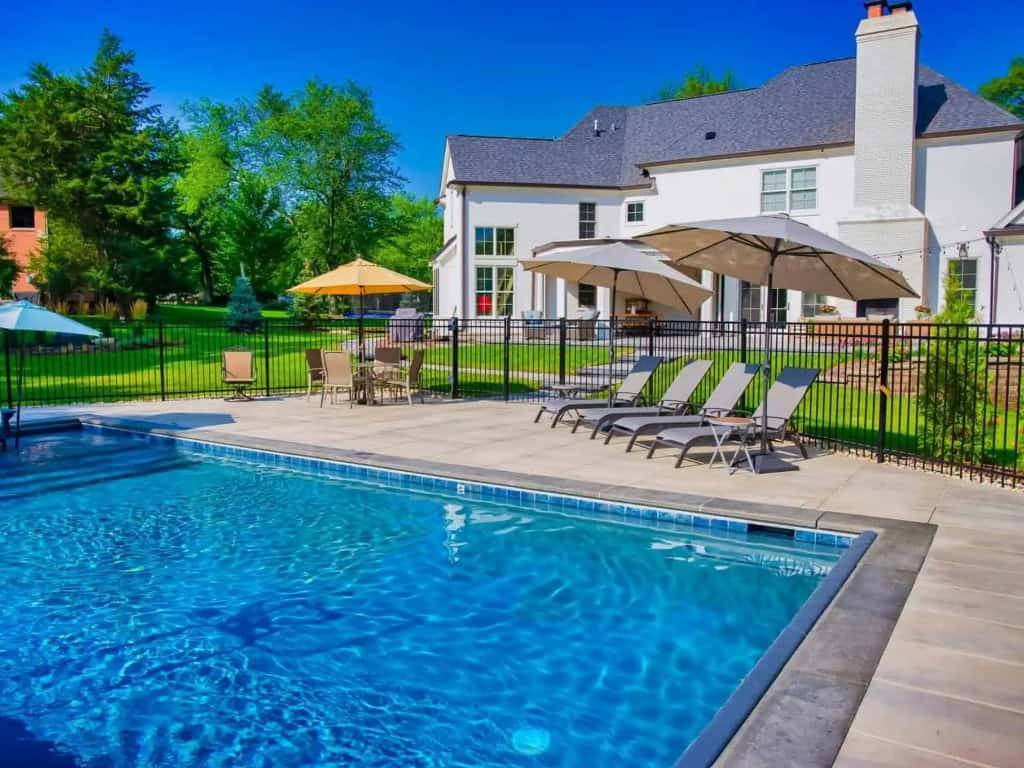
Shrinkage cracking comes from the cure: concrete contracts slightly as it dries, and if it dries too fast or too unevenly the surface pulls apart in fine lines before the shell has gained its strength. In The Swim ties most crazing to insufficient curing time or to letting the surface dry out in hot weather, and River Pools (updated 2025) puts the cure for gunite at roughly one month before the concrete has fully bonded. A shell sprayed in high summer and left to bake is the classic case.
The countermeasure is routine and unglamorous: keep the fresh shell damp through the cure, protect it from direct sun and wind in the early days, and do not rush the tile and finish crews onto it. The mix matters too. Gunite is only wetted at the nozzle, so the crew controls how wet the shell goes on, and a lean, well-placed mix has less moisture to give up as it cures. The same logic applies later to the plaster or pebble finish coat, which can show its own surface crazing if it is cured badly, separate from the shell beneath it.
What causes a structural crack in a gunite shell
A structural crack comes from force, not from drying: something moved the shell, or the shell was not strong enough where the load landed. In The Swim lists expansive soils that swell when wet, hydrostatic pressure from groundwater, inadequate rebar placement and concrete mix issues among the documented causes, and PoolPro Magazine (2020, updated 2025) separately points to soil instability and under-strength concrete, below a recommended minimum of 4,000 psi, as causes it sees in the field.
Those causes sort into the ground and the build. The ground: soil that swells and shrinks with moisture, groundwater pushing up on an empty or drained shell, a slope that creeps. The build: steel placed too sparsely, too close to the surface or left untied so it shifted during spraying; concrete that went on thin, wet or weak; a cure cut short so the shell was loaded before it was ready, all during construction. The ground is the builder's problem to investigate before the dig, and the build is the builder's problem to get right, which is why the trade treats structural cracking as a defect.
How rebar placement and control joints manage movement
Rebar placement and control joints handle movement in different ways: the steel cage, spaced and tied to the structural drawings and held off the soil so concrete surrounds every bar, lets the shell take bending and settlement without splitting, while joints give the concrete around the pool a planned place to move. The steel turns a brittle material into a reinforced one, and PoolPro's finding that shrinkage cracks stay shallow when enough steel is present is the same principle from the other direction: the bars hold the concrete together even where it wants to pull apart.
A gunite shell is sprayed as a single continuous structure, so most of its movement is carried by the steel rather than by joints in the shell, and it is the structures around the pool that are jointed deliberately. An expansion joint between the coping and the deck lets the deck move with the seasons without pushing on the pool, and on long or unusual designs engineers may call for control joints that give the concrete a planned place to move. Ask the builder to point to the joints on the drawings and explain what each is for.
What Illinois soil and freeze-thaw conditions add to the picture
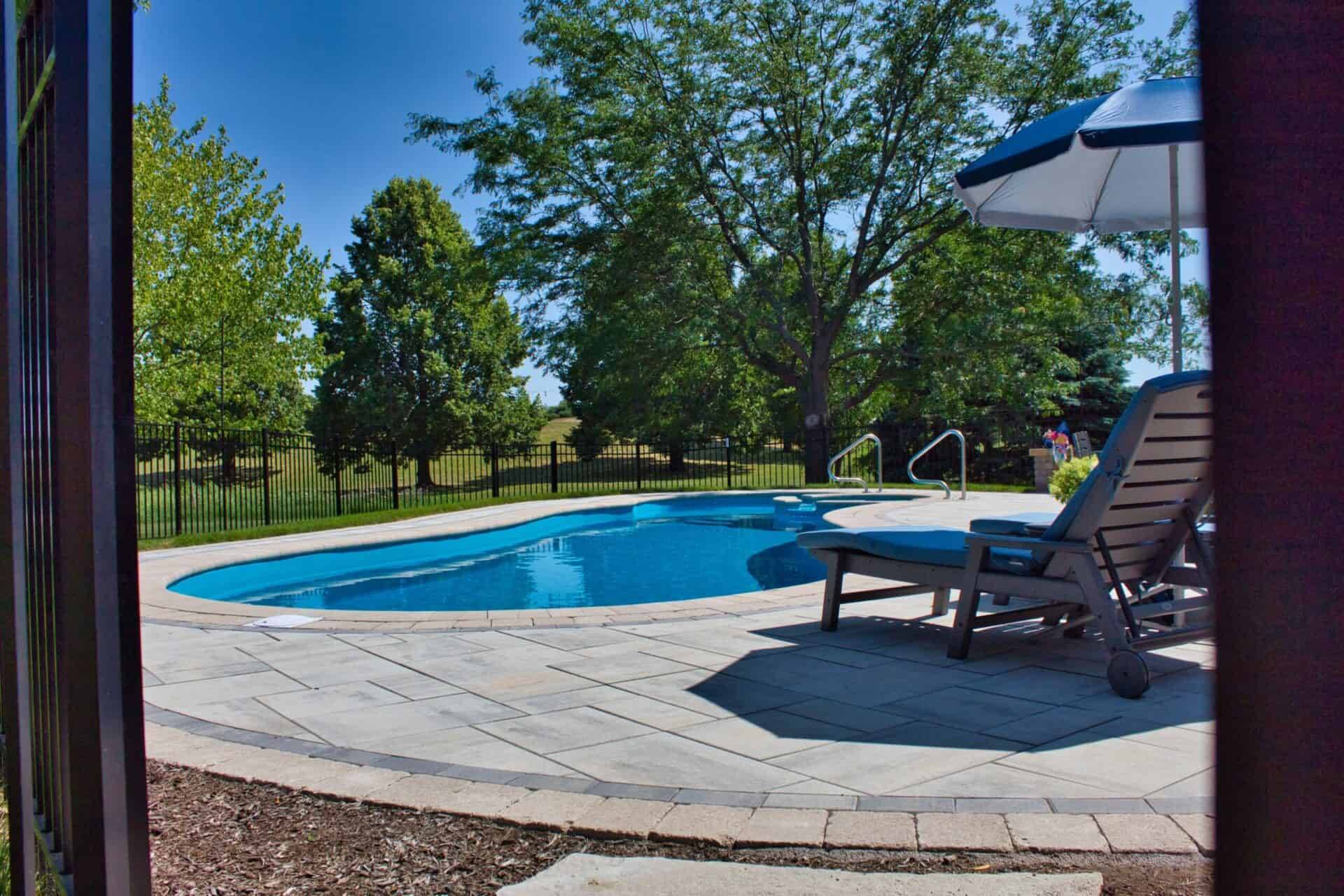
The Chicago suburbs add a load that a warm-climate build never sees: soil that freezes and thaws every winter and, on many lots, clay that holds moisture. Pool & Spa News explains that frozen, expanding soil moisture around a shell can create severe uplift forces strong enough to crack a pool, which is why frost heave sits near the top of the structural-crack list in this market. Clay compounds it, swelling when wet and shrinking when dry, even without frost.
Site soil conditions and local frost depth are among the factors an engineer evaluates when planning the rebar and the foundation of the shell, along with drainage around the pool and how groundwater is relieved beneath it. There is no single Illinois number to design to; the municipality and the approved plan control on any project, so the right question for a builder is what the soil report and the frost depth on this lot mean for this design. The cold-climate guide in this series covers the seasonal side.
Why curing practice and rebar work are what to ask a builder about
Every cause in this guide traces back to something the builder controlled or should have investigated, which is why the questions worth asking pool builders are how the steel is placed and how the shell is cured. Ask how the rebar spacing and cover are specified and who inspects the cage before the spray. Ask what strength the mix is designed to and whether it is tested. Ask how long the shell cures before anyone works on it and how it is kept damp. Ask what the soil report said and how the design responded. A builder with good answers has usually built shells that do not crack.
That is the standard a concrete pool building service should be held to, and it is what the installation page describes: how a custom gunite pool is engineered for a specific site, how the build is sequenced and inspected, and what a consultation with Wave Outdoors Pools covers before any steel is bent.
Sources: PoolPro Magazine (2020, updated 2025); In The Swim; River Pools (updated 2025); Pool & Spa News (2008)
Want a gunite pool built to stay sound?
The installation page explains how Wave Outdoors Pools engineers and sequences a custom concrete pool and what a consultation covers.