Swimming Pools
Gunite pools · Guide
Gunite pools in a cold climate: what Illinois winters do to the shell
A concrete pool in the Chicago suburbs spends every winter closed and covered, and the shell has to be designed for that season as carefully as for July. This guide explains what freeze-thaw conditions actually do to a gunite pool and the specific safeguards, from hydrostatic relief to winter water level, that keep the shell sound.
A gunite pool in a cold climate is kept sound by a working hydrostatic relief valve, a winter water level lowered but never emptied, plumbing set below frost depth, and a shell engineered for frost and soil movement.
A gunite pool in a cold climate: what cold weather does to a concrete shell
Cold weather works on a concrete shell from the ground, not the air: soil around the shell freezes, expands and pushes, then thaws and lets go, winter after winter. Pool & Spa News explains that any moisture in the soil will freeze and expand, and that this causes severe uplift forces that can crack a pool. A shell in a warm climate never meets that force; a shell in the northwest suburbs meets it every year for as long as the pool exists.
A pool is a special case because it is a hollow, rigid box with water inside and soil outside. When the surrounding soil expands unevenly, part of the shell is pushed while another part is held, and that difference is what stresses a wall or lifts a corner. The pool's own water helps, which is why the winter level matters, and the steel inside the concrete helps, which is why rebar design matters. Latham Pool (2026) notes that fiberglass shells are made to flex with ground movement; a concrete shell is rigid, so it relies instead on its steel, its drainage and the weight of what it holds. The finish over the concrete is chosen with winter in mind too, which is covered below.
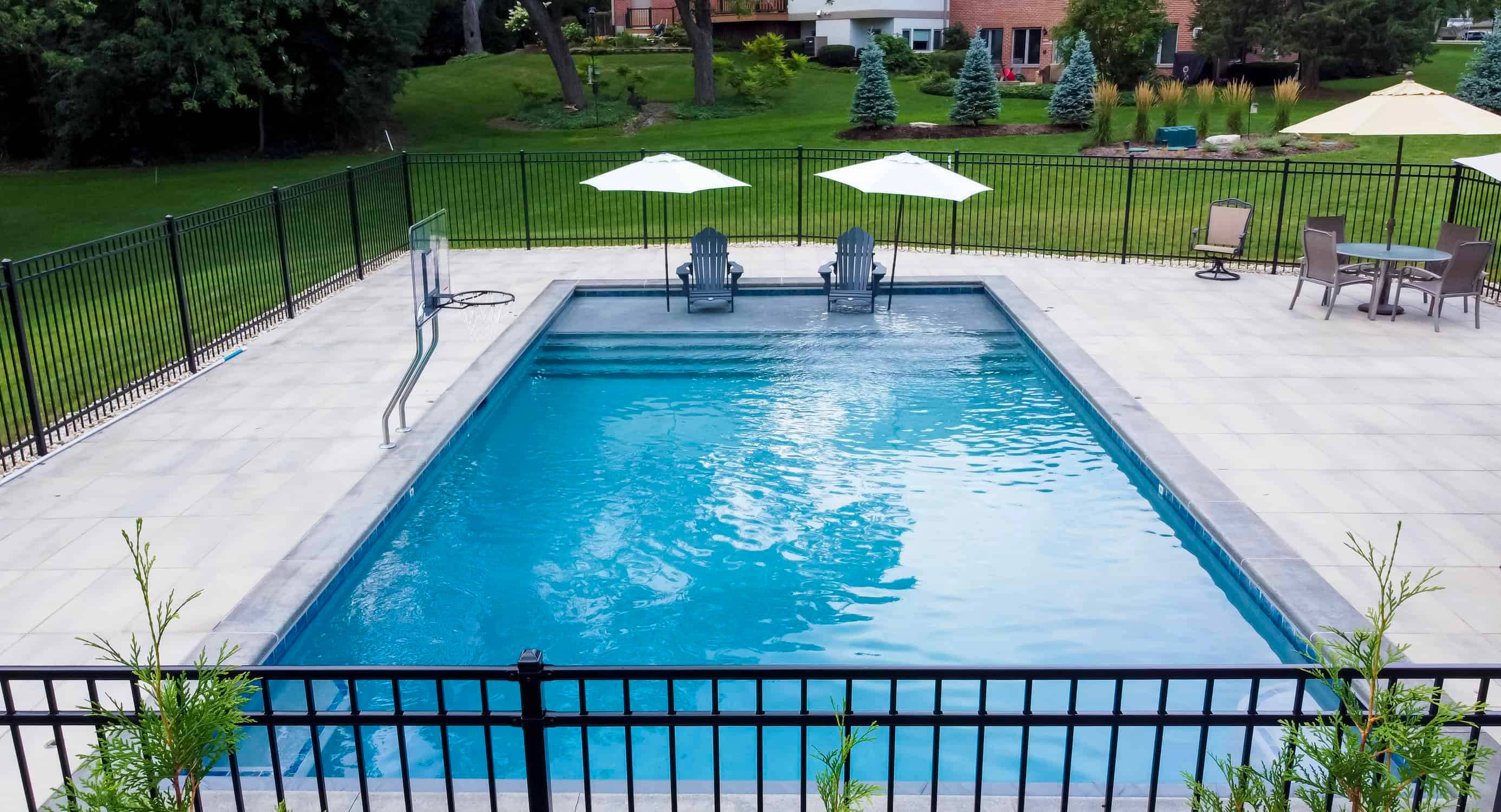
What a hydrostatic relief valve does, and why it matters here
A hydrostatic relief valve is a fitting set into the floor of the pool, usually in the main drain sump, that opens to let groundwater under the shell come up into the pool instead of pushing up on it. TMI Sustainable Aquatics (2022) explains that the valve gives rising groundwater a relief point so that, instead of pushing on the pool, it enters the pool and pressures equalize. Without that relief, a shell sitting in saturated ground with the level low can be lifted like a boat.
It matters most in this climate in the shoulder seasons. Spring thaw and heavy fall rain raise the groundwater exactly when the pool is lowered for closing or not yet filled for opening, so a working relief valve, and in some soils a perimeter drain or well point to manage groundwater, is part of a winter-ready design rather than an optional extra. Valve adequacy depends on its sizing and on the site's soil, so a valve is not a substitute for understanding the groundwater on a particular lot. And there is no universal rule for how the valve is handled through winter, so ask the installer how it is sized, where it sits and how it is meant to work when the pool is closed.
Closing a gunite pool for winter: how to close it and whether you can drain a concrete pool
Closing a gunite pool for winter means lowering the water only enough to protect the plumbing and the tile, never draining it, because that remaining weight is what holds the shell against the soil pressing in as the ground freezes. What is in the pool presses down and outward against the soil, and that is what keeps a shell from lifting or bowing when the ground around it freezes. Draining a concrete pool for the winter removes the single force holding the soil back, which is why the answer to "can you drain it" is no for a shell left in the ground over an Illinois winter.
Published guidance describes the closing routine in similar terms. River Pools' cold-climate guide (2025) lists lowering the level a few inches, but never below the bottom of the skimmer, blowing out the lines, plugging the returns and the skimmer, and covering the pool securely. Guidance on exactly how far to lower the pool varies by builder and by how the skimmer and returns are protected, so ask the installer to explain the target level for a specific pool, and put the question of who closes the pool each fall to whoever will be winterizing it.
How finish choice and finish condition affect freeze-thaw wear
Finish choice affects freeze-thaw wear mostly at the waterline and the exposed upper wall, where the surface passes through wet, dry and frozen states each winter while the rest of the interior stays submerged, so a dense, well-bonded surface that takes on less moisture has less to expand when it freezes. The shell and the winter level carry the structural load; the finish carries the cosmetic one, which is why the same winter can leave one pool's waterline chalky and another's untouched.
Which finish family stands up to freeze-thaw best is not settled in the published sources this series relies on, so any blanket ranking of plaster against quartz or pebble should be treated with caution. What can be said is that the finish's condition entering winter matters: a fresh finish that was cured and started up correctly, chemistry that was balanced before closing, and a cover that keeps the waterline from repeated freeze-and-thaw exposure all reduce the wear the season causes. The finish guide in this series compares the families on wear; for winter specifically, the useful question for an installer is what has held up on local pools over many seasons.
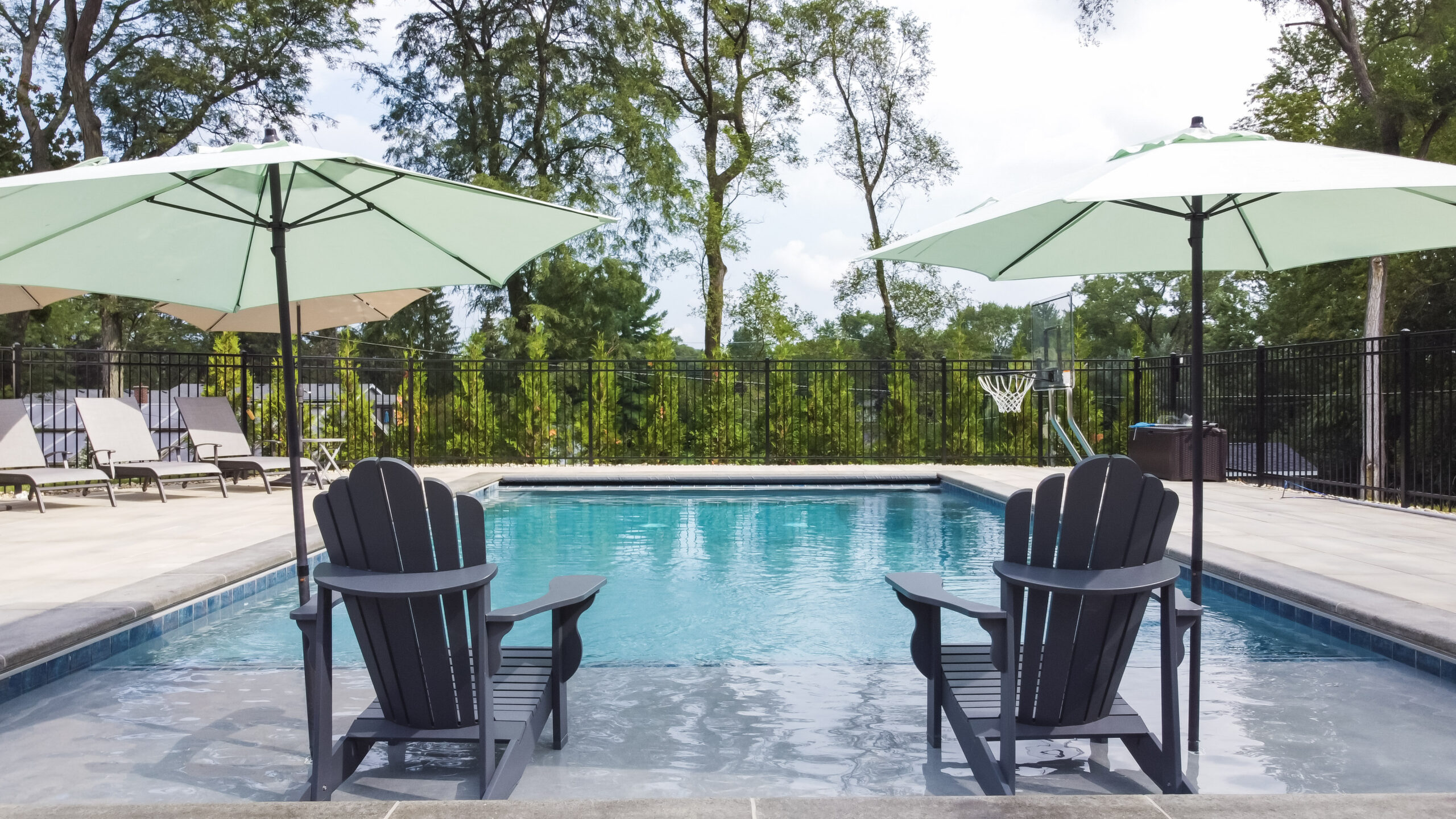
What Chicago-suburb frost and soil conditions add to the plan
Frost depth sets how deep the ground freezes and therefore how deep plumbing and footings have to go to stay below it, which makes it the local figure a pool plan starts from. MyConcreteCalc's frost-line guide places Illinois frost depth at roughly 36 inches on average, with a regional range of about 20 to 50 inches or more, and notes that building codes require footings to be placed below the local frost line.
Soil is the other. Where a lot sits on clay, which holds moisture and moves with it, frost heave and seasonal swelling are more of a factor than on a sandy, free-draining site, and the drainage around the pool deck has to be designed accordingly. Local frost depth and site soil conditions are among the factors an engineer evaluates when planning rebar, footings and plumbing lines, along with the groundwater beneath the shell. The exact requirements come from the municipality and the approved plan for a specific project, not from a statewide rule, so a builder's soil report and site assessment are where the plan for winter actually gets made.
Building for an Illinois winter from day one
Building for winter means designing the shell, the drainage and the closing routine together before the dig, not adding them at the end. In practice that looks like a steel and concrete design that accounts for frost and soil, a hydrostatic relief system sized for the site's groundwater, plumbing set below frost depth with a way to be blown out and plugged, and a closing plan the owner understands. It also means honest scheduling around the season: Wave Outdoors Pools' planning guidance notes that concrete pool construction can continue in winter with a temporary tented enclosure when site conditions, weather and the approved project plan support that method, which is a possibility to ask about rather than a promise for any given project.
A shell designed for Illinois winters from the start is part of what makes a gunite pool the custom concrete path worth the investment. The installation page explains how that design comes together for a specific yard, how site assessment and engineering feed into it, and what a consultation with Wave Outdoors Pools covers when the question to put to pool builders is not whether concrete can survive here but how to build it so it does.
Sources: Pool & Spa News (2008); TMI Sustainable Aquatics (2022); River Pools (cold-climate guide, 2025); MyConcreteCalc (frost line depth guide); Latham Pool (2026)
Ready to plan a gunite pool built for winter?
The installation page explains how Wave Outdoors Pools designs and builds a custom concrete pool for this climate and what a consultation covers.