Swimming Pools
Fiberglass pools · Guide
Fiberglass pools in Chicago winters
Anyone installing a fiberglass pool in the northwest suburbs is really asking one question: what happens to it in January? This guide explains how the shell handles freeze and thaw, and what winterizing actually involves.
Fiberglass pools cope with winter when the shell flexes with freeze-thaw movement, sits in compacted free-draining crushed stone, and is closed each fall by lowering the water slightly, blowing out lines, plugging returns and skimmer, and covering it securely.
How does a fiberglass pool in a cold climate handle freeze and thaw?
A fiberglass pool in a cold climate handles freeze and thaw by flexing with the ground rather than resisting it, which is the property that lets it tolerate winters that stress more rigid materials. Every winter here, moisture in the soil freezes and expands, lifts whatever sits above it, and then thaws and settles again in spring. A structure that cannot give has to absorb every one of those movements as stress.
Latham Pool (2026) explains that fiberglass shells flex to accommodate ground movement from freeze-thaw cycles rather than fighting against it, unlike more rigid materials. The shell is a composite, strong in tension and able to move slightly without damage, which is exactly the behavior frost heave calls for. The gelcoat surface helps too: it is sealed and non-porous, so it does not absorb moisture that could freeze within the surface itself.
Flexibility is not a license to ignore the ground, though. A shell that flexes still needs an even, well-drained bed to flex against, and the ground around it has to be built so that frost has as little to push with as possible. That is the job of the base and backfill.
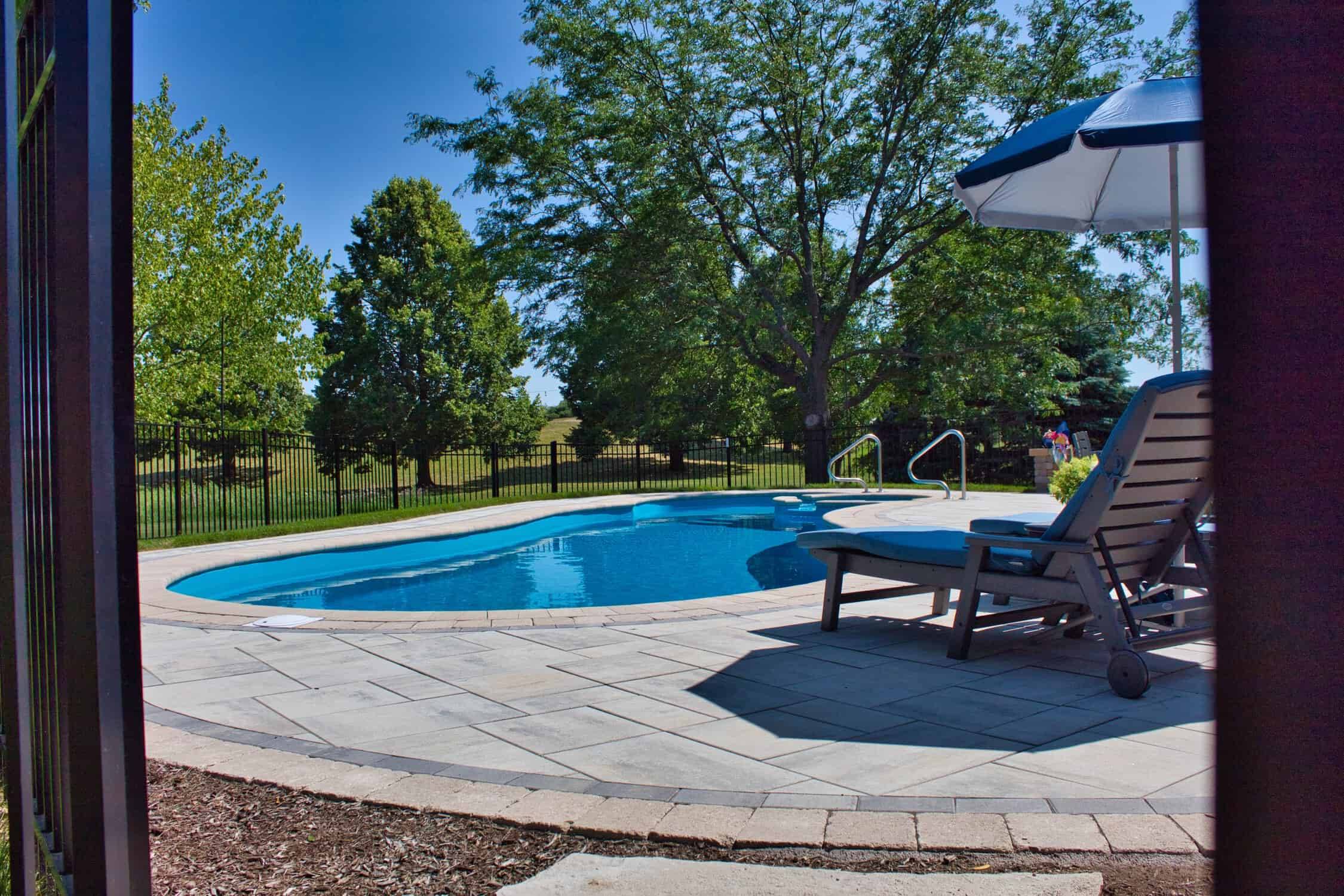
Why does the gravel base matter for frost resistance?
The gravel base matters because frost heave needs moisture to work, and compacted crushed stone drains moisture away from the shell before it can freeze in place. Soil that holds moisture next to a pool is soil that will expand against it in January. Stone that lets moisture fall through to the bottom of the excavation gives frost nothing to lift.
River Pools' cold-climate guide (2025) ties encasing the shell in 3/4-inch crushed stone to better drainage and less soil movement, which the article connects to preventing frost-heave pressure, since water cannot accumulate around the shell. The stone also stays put when it is wet, unlike sand, which is why cold-climate installer guides treat it as the standard rather than an upgrade.
The same backfill choice that keeps a shell from bulging in a wet spring is what keeps it stable in a hard winter, and a separate guide covers that failure mode in depth. For this page, the point is simpler: ask the installer what material surrounds the shell and how it is compacted, because the answer decides how the pool behaves in the cold.
How do you close and winterize an inground fiberglass pool for the winter?
You close and winterize an inground fiberglass pool by lowering the water level slightly, never below the bottom of the skimmer, then blowing out the plumbing lines, plugging the returns and the skimmer, and covering the pool securely so it can sit through the freeze untouched. A fiberglass pool is closed, never emptied: the shell stays full through the winter, and the routine protects the plumbing and the surface rather than the structure.
River Pools' cold-climate guide (2025) describes winterizing as lowering the water level, blowing out lines, plugging returns and the skimmer, and covering the pool securely. In practice, the sequence looks like this:
- The pool is balanced and treated for the closed season.
- The level is lowered a few inches, but never below the bottom of the skimmer.
- Every plumbing line is blown clear with compressed air so nothing is left inside to freeze and split a pipe.
- The returns and the skimmer are plugged, and the equipment is drained and shut down.
- A cover is fitted and anchored securely, and it stays on until spring.
A pool service company or a confident homeowner can do this work. Ask the installer who they recommend for closing, and ask for a written closing checklist for the specific shell, skimmer, and equipment on your project, because the details vary from one pool to the next.
Why does local frost depth matter for a shell in cold climate winters?
Local frost depth matters because everything within it, including the plumbing runs, the coping, and the top of the backfill, freezes and can heave in a hard winter, so it sets how deep the lines are buried and how the backfill is drained. MyConcreteCalc's frost-line guide puts the Illinois average at roughly 36 inches, ranging from about 20 inches in the south to 50 inches or more near the Wisconsin border, and building codes require footings to clear the local line.
The controlling figure is local, and it varies from one village to the next. Ask a local contractor or engineer familiar with the project's specific village for the controlling frost depth and site conditions, rather than relying on a regional map. The deepest parts of a shell are the least exposed; the shallow end, the plumbing, the coping, and the deck take most of the winter.
That is why plumbing depth and routing, the drainage of the deck and the lawn toward or away from the pool, and the compaction of the backfill near the surface are all decided during construction. An installer who works in this climate designs for the frost line as a matter of course. One who does not may not think to ask.
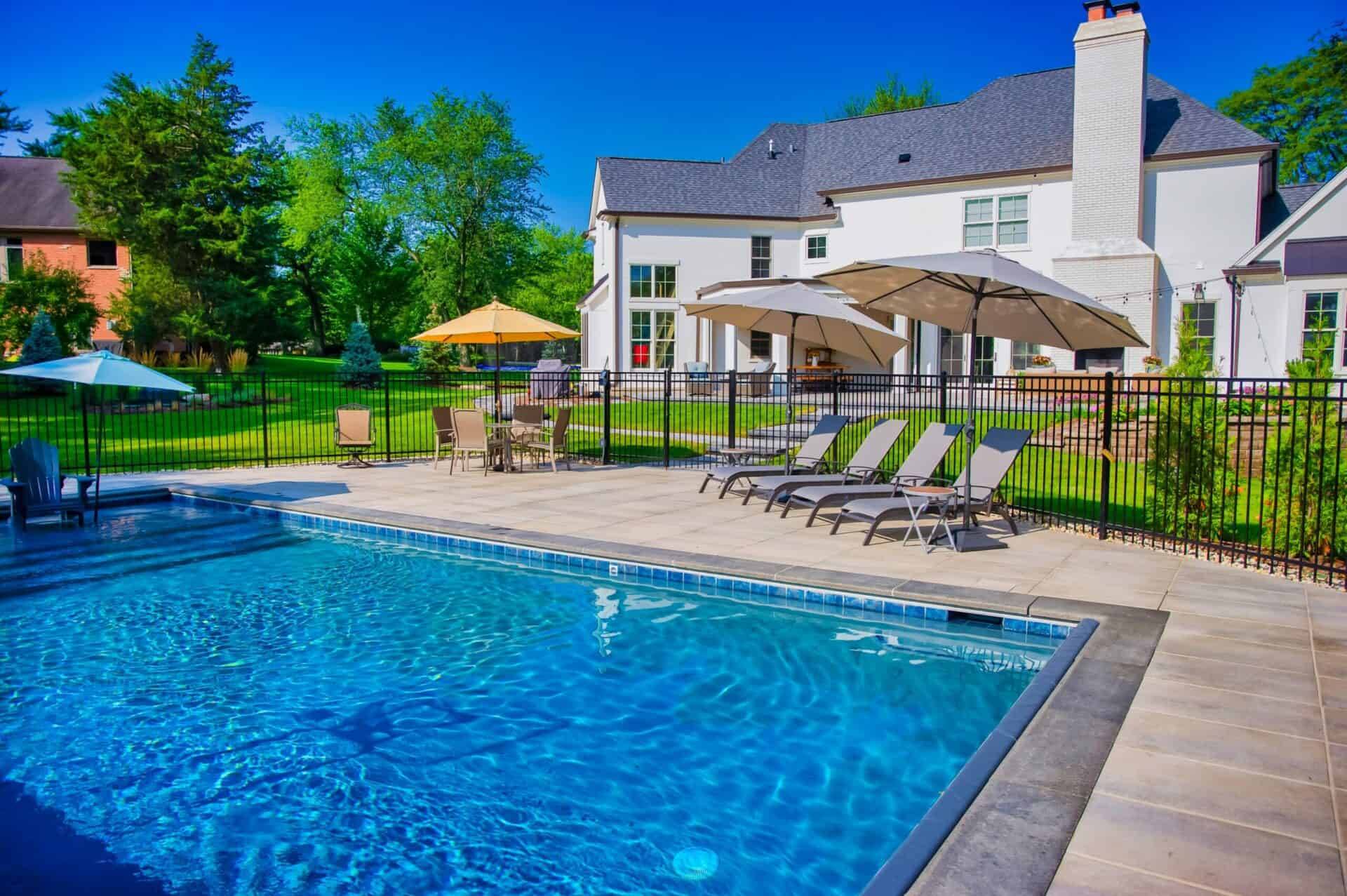
Is winterizing a fiberglass pool simpler than closing a concrete pool?
Winterizing a fiberglass pool is simpler in a specific sense: the shell itself asks for very little, because it is a single molded piece with a continuous gelcoat surface that flexes with the ground rather than resisting it, so the closing routine is mostly about the water level, the lines and the cover. Both pool types are closed in the same broad way, and the differences sit in how each surface is protected through the freeze.
Latham's fiberglass planning guide describes the shell as flexing with ground movement instead of fighting it, and River Pools' winterizing steps for a fiberglass pool centre on lowering the water level slightly, never below the bottom of the skimmer, blowing out and plugging the lines, balancing the water, and fitting the cover. A concrete pool has its own closing routine around its finish and waterline; a separate guide covers how gunite pools are built and closed for cold climates, and an installer who builds both can walk through the two checklists side by side.
Neither material is maintenance-free in this region, and neither should be drained for winter. Ask an installer who builds both to walk through the closing routine for each, and to say plainly which one they would rather own through a northwest-suburban January.
How should frost and drainage shape the install plan?
Frost and drainage shape the install plan from the earliest site visit, not after the ground freezes: the base and backfill, the depth and routing of plumbing, the drainage grades, and the placement season are all installation decisions. A shell that is set in free-draining stone, plumbed below the frost line, and graded to shed runoff has already won most of the argument with January.
The next question, then, is how a particular shell is fitted to a particular property with this climate in mind: what the excavation will find, how the base is built, where the plumbing runs, how the deck and drainage plan wrap around the pool, and when in the season the shell should be placed. The fiberglass installation page takes up exactly that question, and it is the right place to go once winter behavior makes sense.
Sources: Latham Pool (2026); River Pools, cold-climate guide (2025); MyConcreteCalc, frost line depth by zip code
Ready to plan a fiberglass pool built for this climate?
The installation page explains how shell fit and site preparation account for frost, drainage, and season from the start, and how a consultation begins.