Swimming Pools
Fiberglass pools · Guide
Fiberglass pool backfill: why walls bulge or shells pop up
Backfill is the quiet half of the fiberglass pool installation process, and it has more to do with a shell's long-term stability than the shell itself. This guide explains why walls bulge or shells lift, and what correct backfill looks like.
Fiberglass pool backfill failures like bulging walls and popped-up shells are usually a groundwater problem rather than a shell defect, which installer guides address with free-draining crushed stone placed in layers as the pool fills, plus hydrostatic relief.
Why do fiberglass pool walls develop bulging and cracks?
Fiberglass pool walls bulge when the pressure of saturated ground outside the shell exceeds the pressure of the water inside it, and the wall flexes inward to find a new balance, which can also craze or crack the gelcoat along the line of movement. A fiberglass shell is strong for its weight, but it is thin, and unlike a heavy gunite shell it depends on the material packed around it for support. When that material drains, the walls carry very little sideways load. When it does not, the load can be considerable.
Groundwater is the usual culprit. Rain, snowmelt, and seasonal saturation all move through the ground around a pool, and whatever surrounds the shell either lets that moisture pass or holds it. Sand backfill is the classic problem: dry sand seems firm, but once it saturates it loses its structure and behaves more like a heavy liquid than a solid. Industry guides describe saturated sand as a bulging risk once the pressure outside the wall overpowers the pressure inside. Ask the installer to explain this for your site; published guidance varies by builder.
A wall bulge is the visible symptom: a wall that has moved inward from where it was set, often with a surface crack or crazing where the gelcoat was bent. A pop-out, sometimes called a float, is the same failure taken further: with the pool drained or partly drained, the saturated ground lifts the entire shell like a boat. All of these come from the same source, which is why a crack near a bulge usually points back to the ground, and why the fix is the same.
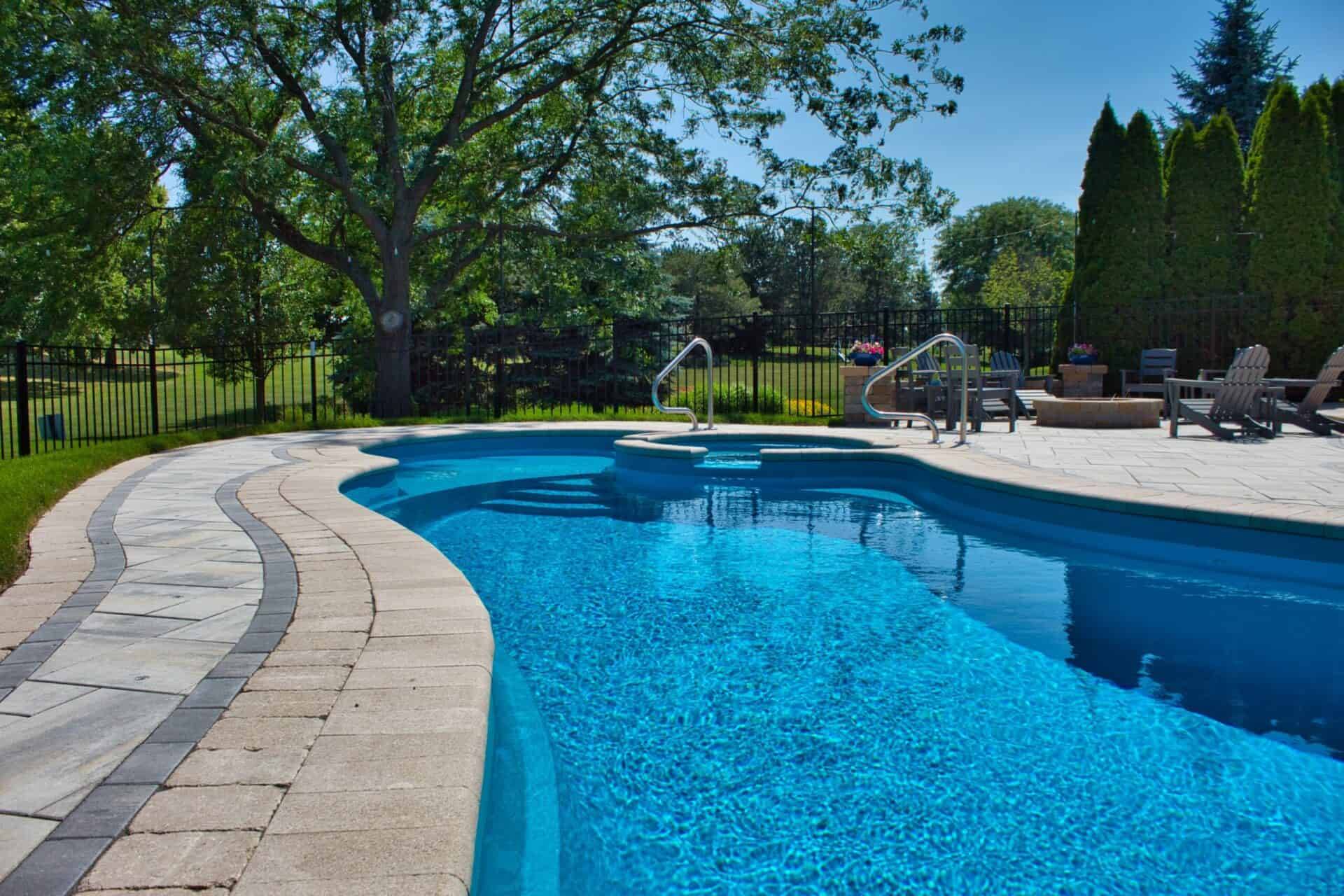
How does the right fiberglass pool backfill material prevent bulging?
The right backfill material is free-draining crushed stone that surrounds the shell without holding moisture, placed and compacted in layers so it supports every wall evenly. The choice of backfill material matters more than most buyers expect, because it is the one part of the installation that cannot be inspected once the deck is in place.
The material most guides recommend is crushed stone rather than sand or excavated soil. John C Young Design (2026) names clean 3/4-inch crushed stone as the recommended backfill material. Angular stone locks together under its own weight, does not liquefy, and lets moisture fall to the base of the excavation instead of pressing on the walls. Sand and native clay do the opposite.
Placement is the second half of the method. Installers commonly backfill with compacted crushed stone as the pool fills, but ask your installer to describe their specific backfill-and-fill sequencing in writing. The logic is balance: as stone rises on the outside of the shell, the pool is filled in step on the inside, so the walls are never loaded from one side only. A shell filled to the top before any stone goes in, or backfilled to the top while empty, is being asked to do something it was never designed to do.
What is a hydrostatic relief valve, and why does it matter?
A hydrostatic relief valve is a small fitting set into the lowest point of the pool floor, designed to let groundwater enter the pool rather than lift the shell when the pool is empty. It is a small part with a large job.
A full pool is held down by the weight of its own water. Drain that pool for a repair, a refinish, or a long shutdown, and the only thing resisting an upward push from below is the shell and its backfill. If the ground is saturated, the pressure from below can exceed the weight of the empty shell. The relief valve equalizes that pressure: the seepage rises through the fitting into the pool bowl instead of under it.
For the same reason, draining a fiberglass pool is never a casual decision. It should be planned with the installer or a qualified technician, timed for a dry season, and done only after the groundwater level has been checked. Ask whether a drainage pipe or observation well is planned around the shell so that level can be measured and, if necessary, pumped down before any future draining.
Does Illinois clay soil make bulging more likely?
Illinois clay soil can make bulging more likely, when a lot sits on slow-draining clay or stays saturated for weeks after a wet spell, conditions an installer should confirm before excavation rather than assume. Clay holds moisture close to a shell far longer than sandy ground, so a backfill that drains freely and a base that drains become more important, not less.
Site drainage grading matters here too. If the finished deck and lawn slope toward the pool, every storm feeds the ground beside the walls. If they slope away and downspouts discharge well clear of the excavation, most of it never reaches the backfill. Ask how the finished grades will run and where roof runoff and surface drainage will go.
Freeze-thaw cycles add a related seasonal pressure: moisture trapped beside a shell expands as it freezes, and drains again in spring. That topic deserves its own guide, but the short version is that the same free-draining backfill that prevents bulging also limits winter movement.
What should you ask an installer about backfill?
Ask an installer to describe the backfill material, the placement sequence, and the groundwater plan in writing before you sign, because those answers will predict long-term stability better than any quoted price. Good pool builders answer these readily; hesitation is itself an answer.
- What material is used for backfill, and is it clean crushed stone or something else?
- How is backfill placed and compacted, and how is it sequenced against filling the pool?
- Is a hydrostatic relief valve installed, and where?
- How will groundwater be checked before excavation and again before any future draining?
- How does the finished grading direct surface water away from the shell?
- Does the shell design include rib reinforcement along the long walls?
None of these require technical knowledge to ask. What you are listening for is a specific, confident description of a method, not a reassurance that bulging never happens.
Where do fiberglass pool problems like bulging fit in the full install?
Bulging and pop-outs are the visible end of a chain that starts earlier in the install: backfill is a single stage inside the larger sequence, and it only works when the excavation, the base, and the shell fit were right before any stone went in. A shell that sits out of level, or an excavation dug too wide or too narrow, changes how backfill loads the walls, which is why installers treat fit and site preparation as decisions made before delivery, not adjustments made after.
The next decision, then, is not about backfill at all. It is about whether a particular shell fits a particular property: access for delivery, soil and groundwater conditions, the deck and drainage plan around it, and the construction sequence that follows. That is what the fiberglass installation page decides, and it is the right place to go once the mechanics here make sense.
Sources: John C Young Design (2026)
Ready to plan a fiberglass pool that stays put?
The installation page explains how shell fit, site preparation, and backfill come together on a specific property, and how a consultation begins.