Swimming Pools
Fiberglass pools · Guide
How a fiberglass pool shell is made, and what to ask about it
Knowing how the shell itself is built makes it far easier to understand how fiberglass pool installation works once it reaches your yard. This guide follows the shell from the mold to the crane, in plain terms.
A fiberglass pool shell is a composite bowl built in layers inside a reusable mold: sprayed gelcoat, a resin barrier coat, then fiberglass and resin laminate reinforced at stress points and cured before the shell leaves the mold.
How is a swimming pool fiberglass shell built before installation?
A swimming pool fiberglass shell is built up in layers inside a reusable mold at the factory, sprayed and laminated from the finished surface inward and cured before it is lifted free and shipped for installation. The mold is a full-size negative of the pool, and one form produces many identical shells, which is why a fiberglass pool comes from a catalog rather than a custom shape.
The order of work surprises most people. The visible surface goes in first, against the polished face of the tooling, and the structure is built behind it. Gelcoat is sprayed onto that prepared face, a resin barrier coat follows, and then the laminate is laid up in layers until the shell reaches the thickness set by its design. Reinforcing ribs and stiffeners are added on the outside, where nobody will ever see them.
Then the shell rests. River Pools' installation-basics guide (2019) states that the shell cures for at least a day before being removed from the mold; exact timing varies by manufacturer. After removal, the rim is trimmed, openings for the skimmer and returns are cut, and the shell is inspected. Because that polished face becomes the pool surface, any flaw in it repeats in every shell it produces, so ask a supplier how their tooling is maintained and how often it is refinished.
Why does gelcoat do more than add color?
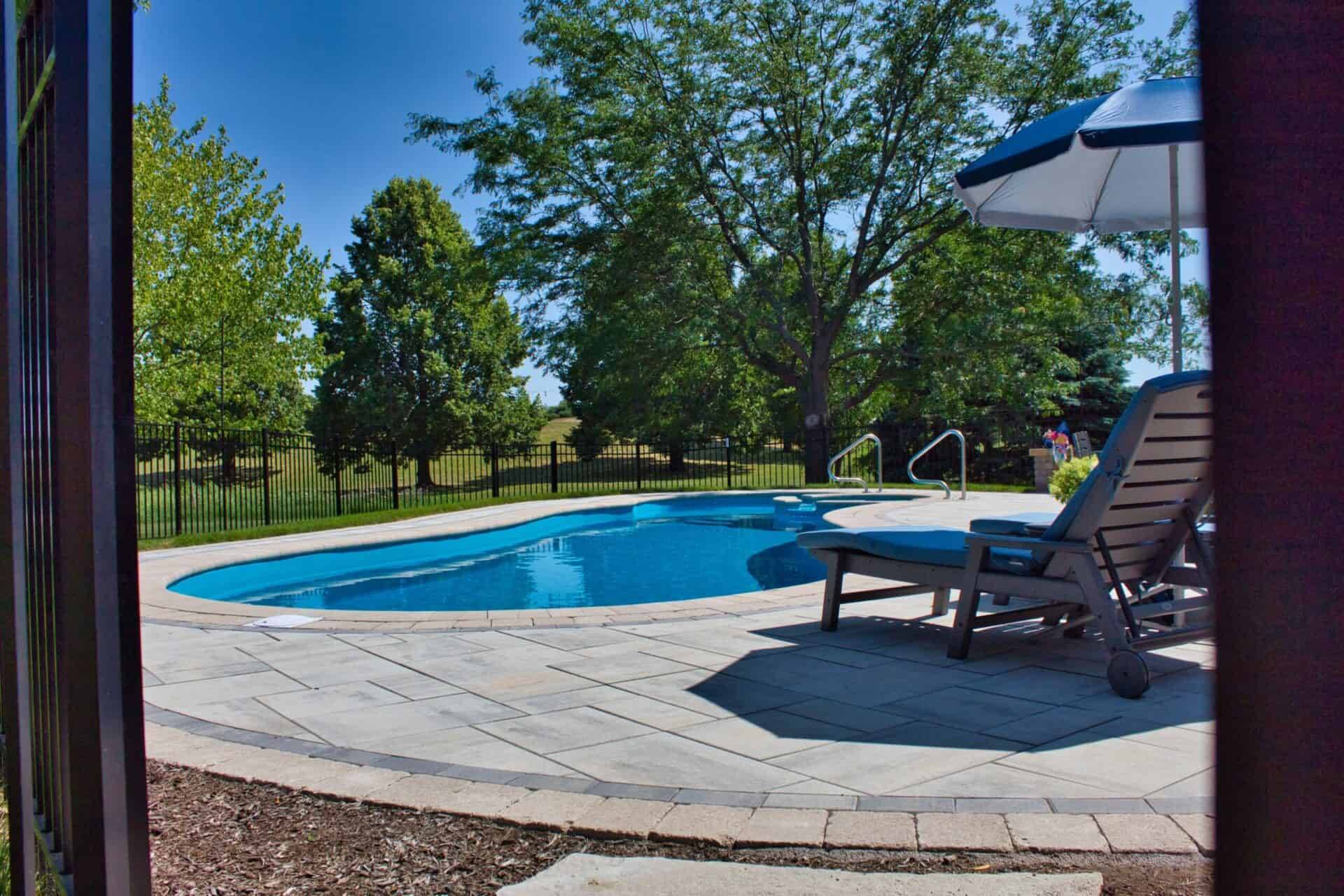
Gelcoat is the sealed, sprayed surface layer that gives the shell its color, its smoothness, and its main line of defense against water and sunlight. Color is the least of its jobs. The same layer is what makes the surface non-porous, what resists staining, and what determines how the pool looks after many summers of sun.
Thickness and consistency are what separate a good surface layer from a poor one. River Pools' gelcoat guide (2019) states that it should be applied in three passes for a total thickness of 25 to 30 mils, and recommends asking your installer or supplier for their specific spec. Mils are tiny units, each a small fraction of an inch, so the entire surface layer is thinner than most people expect. Applied evenly, it lasts. Applied thin in the corners or on the steps, it wears and fades there first.
Ask which product the supplier uses, how many passes are sprayed, how thickness is measured, and whether the color is a solid pigment or a layered effect. The answers tell you a great deal about the factory behind the shell.
What do fiberglass pool shell manufacturers build behind the gelcoat?
Behind the gelcoat, manufacturers build a laminate: chopped fiberglass strands and resin are laid up in layers, with woven roving added where the shell will carry the most stress. The result is a composite, strong in tension and able to flex slightly, which is a different kind of strength from the rigid mass of a gunite shell.
The earliest structural layers are chopped strand, sprayed or hand-laid with resin and rolled to remove air. Trapped air is the enemy of a laminate, because a void is a weak point and a future blister. Woven roving, a heavier fabric of fiberglass, is laid into the corners, the steps, the rim, and the floor-to-wall transitions, where the load concentrates. Structural ribs are then bonded to the outside of the walls to resist flex once the shell is in the ground and backfilled.
Wall thickness varies by manufacturer and by location within the shell, which is why a single number rarely tells you much. Ask how thick the walls are at the floor, the mid-wall, and the rim, what rib pattern is used, and how the laminate is inspected before the shell ships.
What causes problems like gelcoat blistering?
Blistering is a moisture problem: when water migrates through the surface layer into the laminate behind it, pressure builds beneath the surface and lifts it into raised bubbles. The cause is almost always in the layers, not in the owner's upkeep.
The layer that prevents it is the barrier coat. River Pools (checked 2026) explains that a vinyl ester resin barrier layer prevents osmotic blistering by acting as a watertight barrier between the gelcoat and the structural laminate. A shell built without that layer, or with a barrier coat applied unevenly, is far more exposed to blistering over its life, and no amount of careful water balance changes that.
Two questions settle most of it. Ask whether the supplier uses a vinyl ester barrier coat behind the surface and how that is documented, and ask how the shell is inspected for voids before it leaves the factory. If the answers are vague, the surface is the place where vagueness will eventually show.
How does a fiberglass inground pool shell get from the factory to your yard?
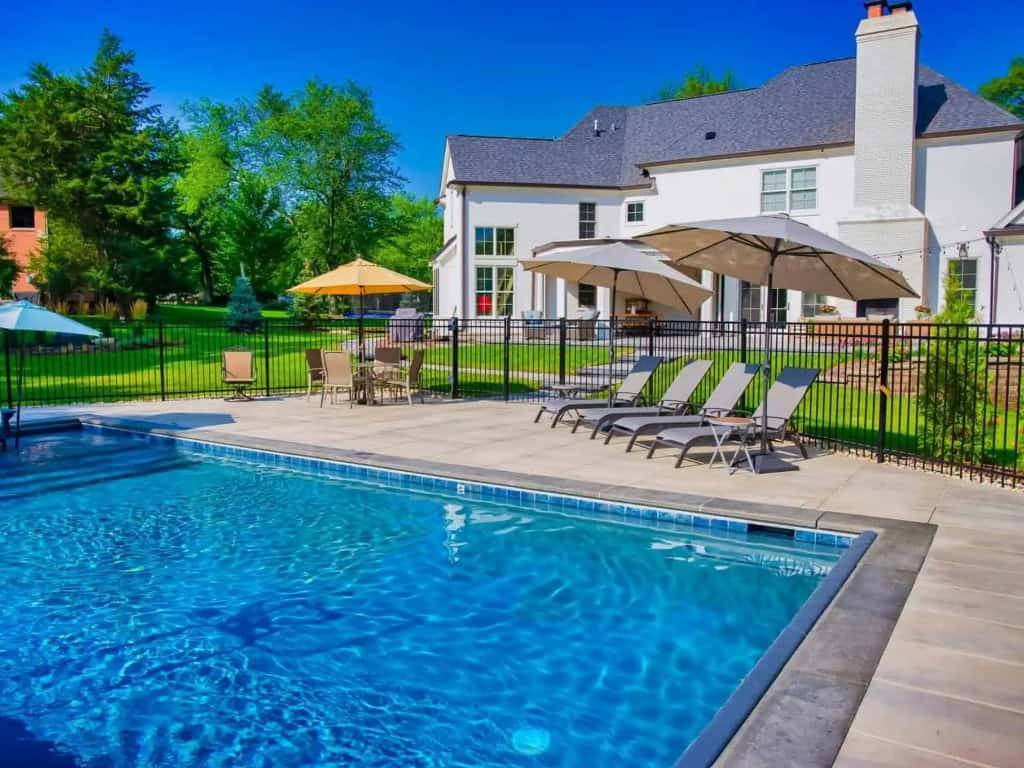
A finished fiberglass shell travels on a flatbed trailer and is lifted off by a mobile crane straight into the excavated hole. Rigging Force (2026) explains that a fiberglass shell is hoisted off a flatbed trailer by mobile crane and set into the excavated hole, and recommends asking your installer how delivery and crane placement are planned for your site's access.
That planning is the whole job. A shell is wide, light, and awkward, so the route to the backyard, the width of the side yard, the position of overhead lines, and where the crane can set up all have to be confirmed before the shell is ordered, not after it arrives. On tight lots the crane may reach over the house. On others, a fence panel or a section of landscaping comes out for the day and goes back afterward.
Ask the pool builder who surveys the route, whether an oversize-load escort or permit is required for the trailer, where the crane will stand, and what happens to the shell if the excavation is not ready on delivery day.
What should you ask a supplier before you buy?
Ask about the layers, then the factory, then the fit, because the layers and the factory decide how the shell will age and the fit decides whether it belongs on your property at all. A well-made shell on the wrong site is still the wrong pool.
- Which gelcoat, how many passes, and to what thickness?
- Is a vinyl ester barrier coat used behind the gelcoat?
- How thick is the laminate, where is roving added, and what rib pattern supports the walls?
- How long does the shell cure before it leaves the mold, and how is it inspected?
- How will the shell reach the yard, and where will the crane set up?
Once those answers are in hand, the question changes from how the shell is made to whether this shell fits this site: the delivery route, the excavation, the base and backfill, the deck and drainage plan around it, and the construction sequence that follows. That is what the fiberglass installation page decides, and it is the natural next step.
Sources: River Pools, gelcoat surface guide (2019); River Pools, vinyl ester resin page (checked 2026); River Pools, installation basics guide (2019); Rigging Force (2026)
Ready to see how a shell is fitted to your site?
The installation page explains how a chosen shell is scoped, delivered, and set on a specific property, and how a consultation begins.