Swimming Pools
Fiberglass pools · Guide
Fiberglass pool sizes and shapes: what the shell allows
Every fiberglass pool installation begins with a choice from a catalog, not a blank sheet of paper. This guide explains what that catalog contains, where it stops, and how a property narrows it to a shortlist.
Fiberglass pool sizes and shapes come from a manufacturer's fixed catalog of molds, broadly grouped into compact, family, and lap-style models, so outline and depth are limited to what a supplier offers, unlike a custom-poured concrete pool.
What fiberglass pool shapes and sizes exist in a catalog?
A fiberglass catalog runs from compact plunge-style shells through family pools to long, narrow lap models, each offered in a fixed set of outlines and depths that the manufacturer's molds define. There is no in-between: if a length, width, or floor profile is not on the list, it does not exist for that supplier.
Industry size charts and consumer guides sort the market into a few broad families, usually compact pools, family pools, and residential lap pools, with typical depth categories alongside them. Within those families, the outlines fall into recognizable groups:
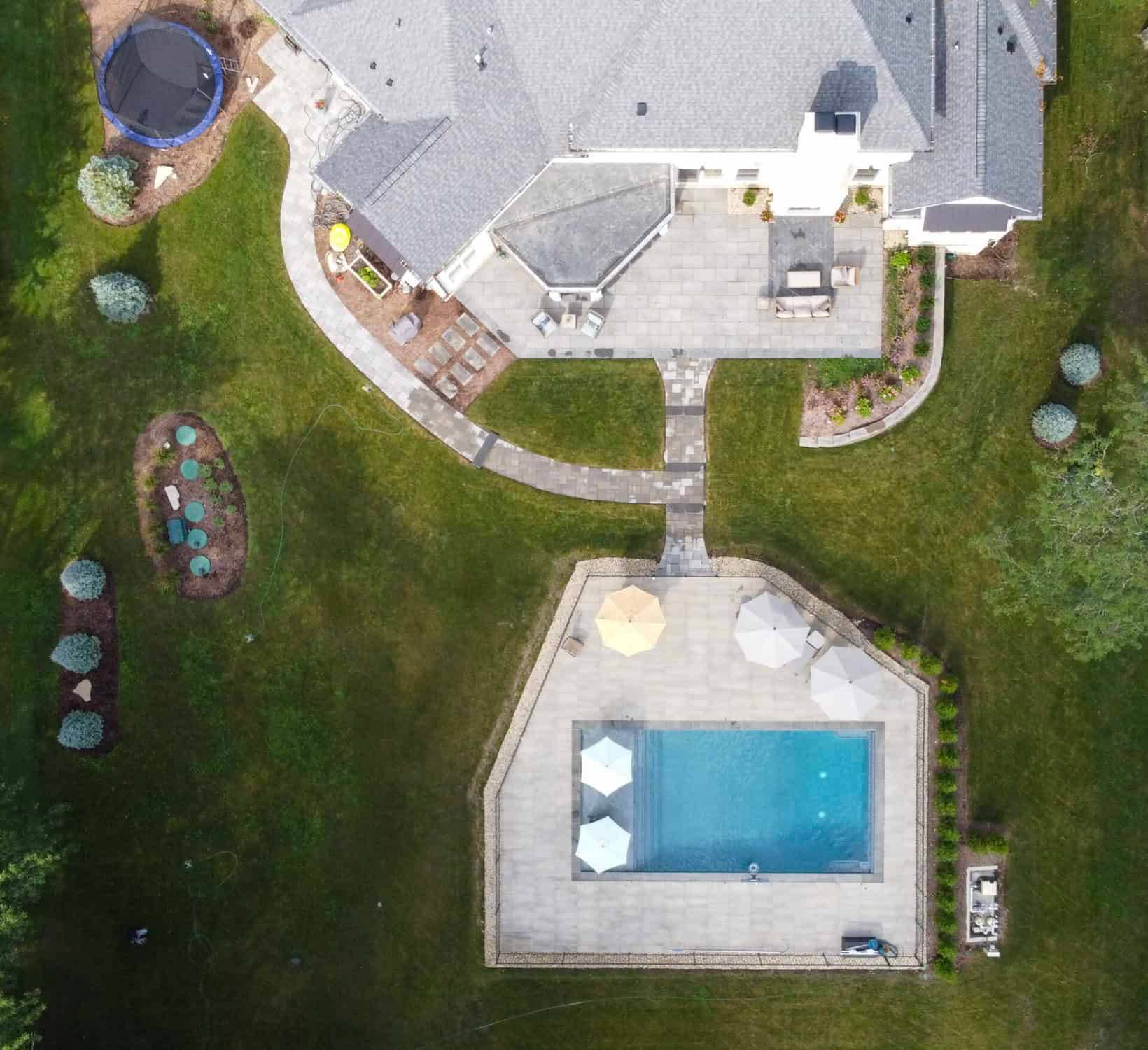
- Rectangles and lap models, with straight walls, square or rounded corners, and the most usable deck around them.
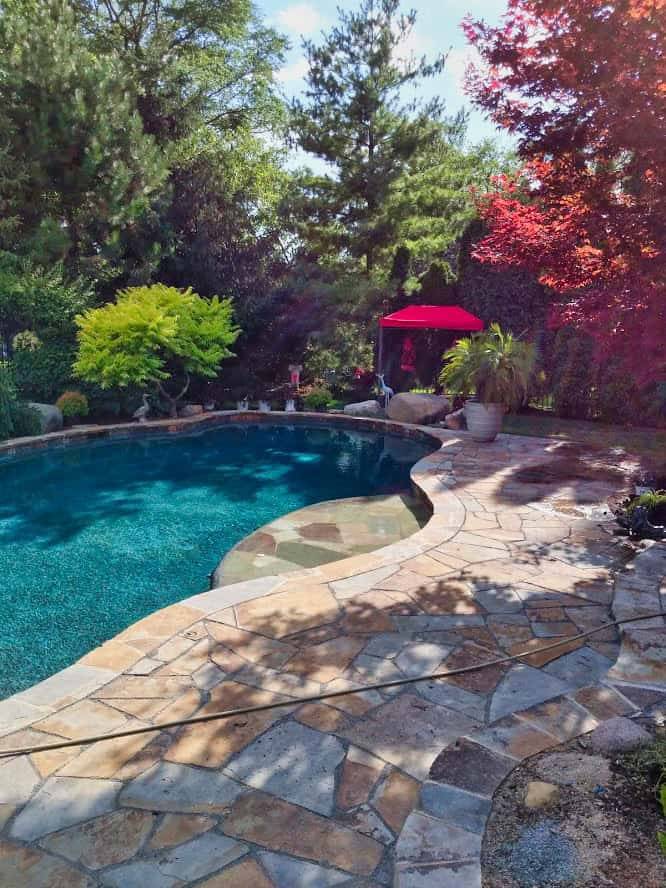
- Freeform and kidney outlines, with curved walls that suit a softer, garden-style setting.
- Roman and Grecian ends, a rectangle with a curved or cut-corner end for a more formal look.
- Plunge pools and small-format shells, sized for cooling off and sitting rather than swimming laps.
Depth profiles vary too: a uniform shallow floor for play and exercise, or a sloped floor with a shallow end and a deeper end. Ask the installer for the current specification sheet from each supplier they work with, showing length, width, and depth for every model, because those sheets change from year to year and vary from one manufacturer to the next.
How do fiberglass pool designs compare to a poured concrete shape?
A molded shell gives you a finished, proven outline at a fixed size, while a poured concrete pool gives you any geometry you can draw, at the cost of the time and money spent building it in the yard. Neither is better in the abstract. They answer different questions.
River Pools' fiberglass overview (2025) explains that fiberglass pools are pre-molded, so shoppers choose from a manufacturer's mold catalog rather than a custom-poured shape. A gunite pool can wrap around a tree, drop a vanishing edge over a slope, fold in an integrated spa at an odd angle, or reach a floor no stock shell offers. A fiberglass pool cannot do any of that, and it does not try to.
What it offers instead is certainty. Every model in the catalog has been built many times, so the entry steps, the bench, the shelf, and the floor transitions are known quantities before the first shovel goes in. The practical question is not which material is more flexible, but whether a stock outline already does what you want the pool to do. For many properties it does. For some, only a custom pour will.
How does a tanning ledge change a small fiberglass pool?
A tanning ledge changes a small fiberglass pool by molding a wide, shallow shelf into the entry or along a side wall, which adds a place to lounge and sit but takes its area straight out of the swimming space. It is worth understanding before choosing an outline, because it comes with the mold or not at all.
Ledge depth is set by the mold, and on a well-designed model it is shallow enough that a lounge chair stays stable and a body stays cool without turning the shelf into a shallow end. River Pools' tanning-ledge guide recommends a ledge depth of 9 to 12 inches and explains how that depth relates to the water depth beside it. Ask the installer for the exact ledge depth on each model, and how it relates to the main pool's water depth. Ask as well whether the model you like includes an umbrella sleeve or a bubbler in the ledge, and whether a bench runs along the opposite wall.
Because the ledge is part of the shell, it competes with the swimming area. On a compact shell, a generous shelf can leave surprisingly little room for actual swimming. Ask to see the swim area measured separately from it, and ask whether a model with an integrated spa or a full-width bench is available if lounging matters more than laps.
How does your backyard footprint narrow the choices?
Your lot narrows the catalog before taste does: setbacks, easements, the deck you want around the pool, and the route a shell can travel to the hole all remove options before you have chosen a color. Most buyers start with a model they like and discover the site has already made half the decision.
Setbacks come first. Each village sets its own distances from property lines, structures, and easements, and the approved site plan controls, so ask the installer to confirm the buildable area for a pool before falling in love with a model. Deck space comes next: a rectangle leaves generous, usable deck on all sides, while a freeform outline can leave awkward slivers unless the patio is designed around it. If your backyard is narrow, side access decides whether a wide shell can be delivered at all, and whether a crane must reach over the house.
Photographs of the yard, a plat of survey, and a rough sketch of where the pool should sit are enough for an installer to eliminate most of the list in a single conversation. That is time well spent before touring showrooms.
Why is choosing a shape early worth doing?
Choosing the outline early is worth doing because the excavation is dug to the shell's template, so a change of mind after digging means a new hole, a new delivery, and a new schedule. Nearly everything else in the project is drawn from that decision.
The deck design follows the outline. So do the plumbing positions, the skimmer location, the lighting, the fence layout, and the permit drawings, which show the pool's exact footprint on the site plan. A shell is also manufactured or pulled from inventory against a specific order, so the choice sets the delivery date. Ask about lead time for the model you want, and ask what happens to the schedule if it changes.
Choosing early also protects the budget. The site work, the patio, and the surrounding construction are priced against a known footprint, and a late change ripples through all of them.
What happens after you pick a size and shape?
Once a size and outline are chosen, the work shifts from the catalog to the site: confirming that the shell physically fits, can be delivered, and can be set, backfilled, and finished correctly on your property. The list answers what exists. The site answers what belongs.
That is where shell fit is decided: the delivery route and crane position, what the excavation is likely to find, how the base and backfill are built, how the deck and drainage plan wrap around the outline, and what the construction sequence becomes once those facts are known. The fiberglass installation page takes up exactly that question, and it is the right next step once a shortlist exists.
Sources: River Pools, fiberglass overview (2025); River Pools, tanning-ledge guide
Ready to fit a shell to your property?
The installation page explains how a shortlisted shell is checked against access, soil, and site before anything is ordered, and how a consultation begins.