Swimming Pools
Fiberglass pools · Guide
Fiberglass pools: pros and cons without the sales pitch
Before you search for fiberglass pool installers near me, it helps to know exactly what the material gives up and what it gives back. This guide sets out both sides plainly, with published figures where they exist.
Fiberglass pools trade a fixed catalog of molded shapes and crane-delivery limits for a smooth non-porous surface, a shell that flexes with ground movement, and a shorter on-site build than concrete, plus a gelcoat finish to plan around.
Which advantages are real: surface, flex, and build speed?
Fiberglass earns its reputation on the surface, the flex, and the speed: the gelcoat is smooth and non-porous, the shell moves with the ground instead of fighting it, and the on-site build is measured in weeks rather than months. Each of these is a real advantage, and each has a reason behind it.
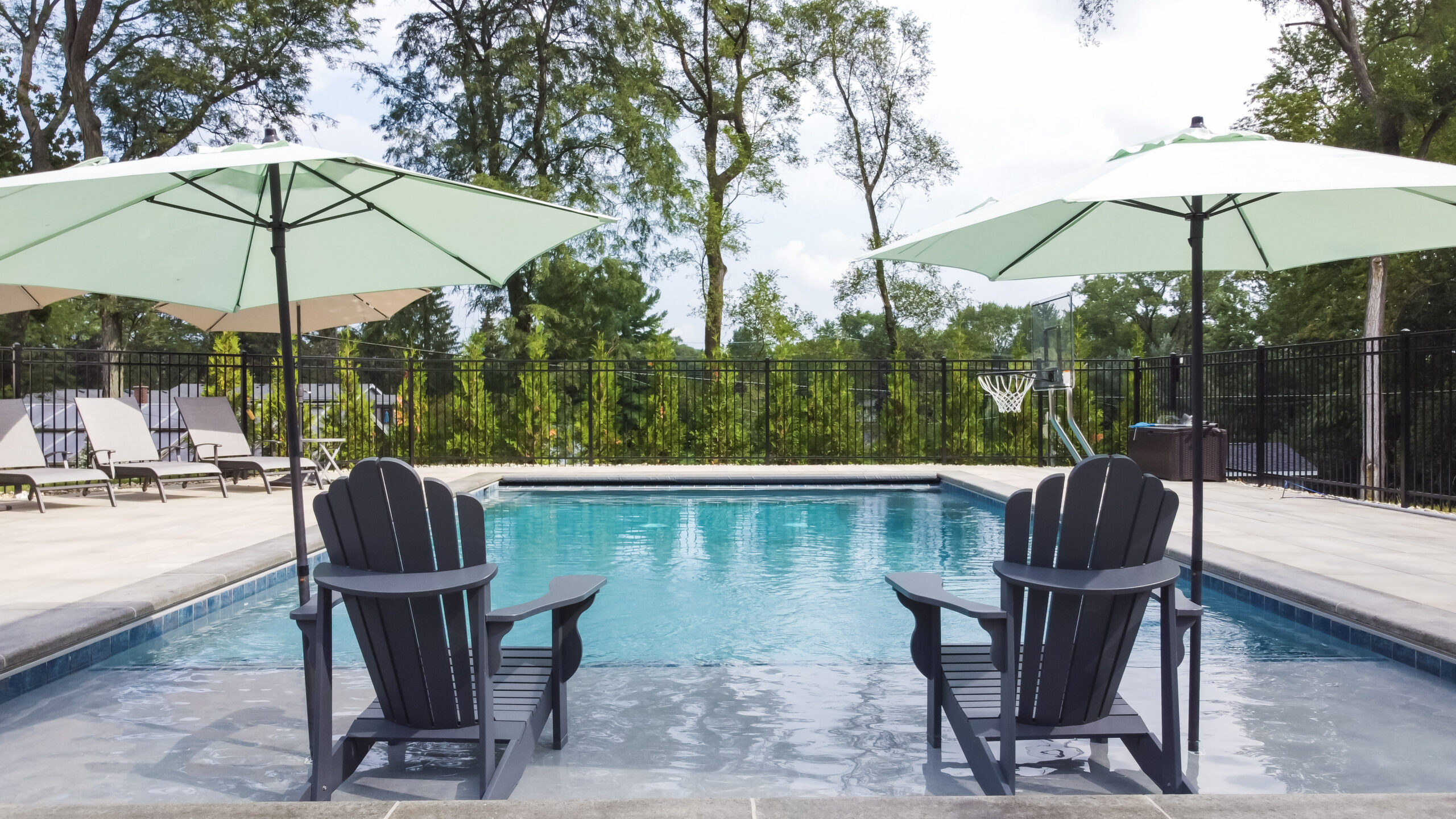
The gelcoat surface is the part you touch. It is smooth and sealed, so algae has less to grip than on a rougher, more porous finish, and water balance and routine upkeep are generally simpler as a result. It is also comfortable underfoot and does not scrape skin the way some finishes can. Ask any owner of a plaster pool what their feet think of it.
Shell flexibility is the quieter advantage. A fiberglass shell is a single molded piece with a degree of give, which lets it accommodate small ground movements that a rigid structure would resist. Build speed follows from the manufacturing method: the shell arrives finished, so most of the work that a poured pool does in the yard has already happened in a factory.
What are the fiberglass pool cons and problems to expect?
The cons are a fixed catalog of molded forms, the logistics of delivering a single-piece shell, and a gelcoat surface that ages and eventually needs attention. None of them is a reason to rule fiberglass out, but each deserves an honest look before the material is chosen.
The catalog comes first. A fiberglass pool is pre-molded, so you cannot design a shape from scratch; you choose from the forms a manufacturer offers, and the deck and site plan wrap around that choice. Delivery is the second constraint. The shell travels on a flatbed and is set by crane, which means the route to the yard, the width of side access, and overhead lines all matter, and some properties are simply not practical candidates.
Gelcoat is the third. It is durable, but it is a finish, and finishes age. Industry guides such as SKIN Microplaster (2026) describe gelcoat blistering, a raised bubble from trapped moisture or gas, as a recurring fiberglass pool issue. Refinishing that surface is specialist work, so ask any installer how the surface is protected from wear and fading over its life, what its long-term care looks like, and what the manufacturer's surface warranty actually covers.
Gunite pool vs fiberglass: how does the build window compare?
A fiberglass shell goes in over weeks, while a gunite pool is built over months, because concrete is formed, sprayed, cured, and finished in the yard rather than in a factory. That difference is real, though the exact span on any property depends on the site, the permits, and the season.
Because the shell arrives finished, the on-site portion of a fiberglass project is typically counted in weeks once permits are issued, while a concrete pool is typically counted in months, since every layer of it is built and cured in place. HomeAdvisor's national planning ranges put fiberglass at two to four weeks and concrete at three to six months after permits, national figures rather than any installer's commitment. Those are broad planning expectations, not a commitment from any installer, and they do not include the design, engineering, and municipal review that precede every build regardless of material. Wave's own planning guidance is narrower and measures a different span: after approvals and site readiness, its fiberglass construction phase typically runs three to four weeks and its concrete construction phase six to eight weeks, with design, engineering and permitting counted separately, so the national figures and the Wave phases are not the same clock.
For a homeowner, the practical effect is fewer weeks with a yard torn up and a better chance of swimming in the same season the shell is placed. A separate guide walks through the stages in order.
Fiberglass vs concrete pool cost: where does the material sit?
In national cost guides, fiberglass sits above vinyl-liner and below gunite or concrete, with wide overlap at the edges of each range. The overlap is the important part: a large, feature-heavy fiberglass project can cost more than a modest gunite one, and the material is only one line on the estimate.
NerdWallet (2025) puts national inground pool costs at $20,000 to $40,000 for vinyl, $20,000 to $85,000 for fiberglass, and $35,000 to $120,000 for concrete or gunite. These are national figures, not a local quote, and they say nothing about a specific yard. Site conditions, access, size, features, utilities, safety work, and the surrounding construction move the number far more than the shell material does.
There is a second cost question beyond the build. Vinyl liners are replaced periodically, concrete pools are refinished on a cycle of their own, and gelcoat has a service life of its own that a refinish eventually addresses. Ask each pool builder to describe the long-term surface care for the material they recommend, in plain terms and without a warranty promise attached.
Does Illinois weather change the calculus?
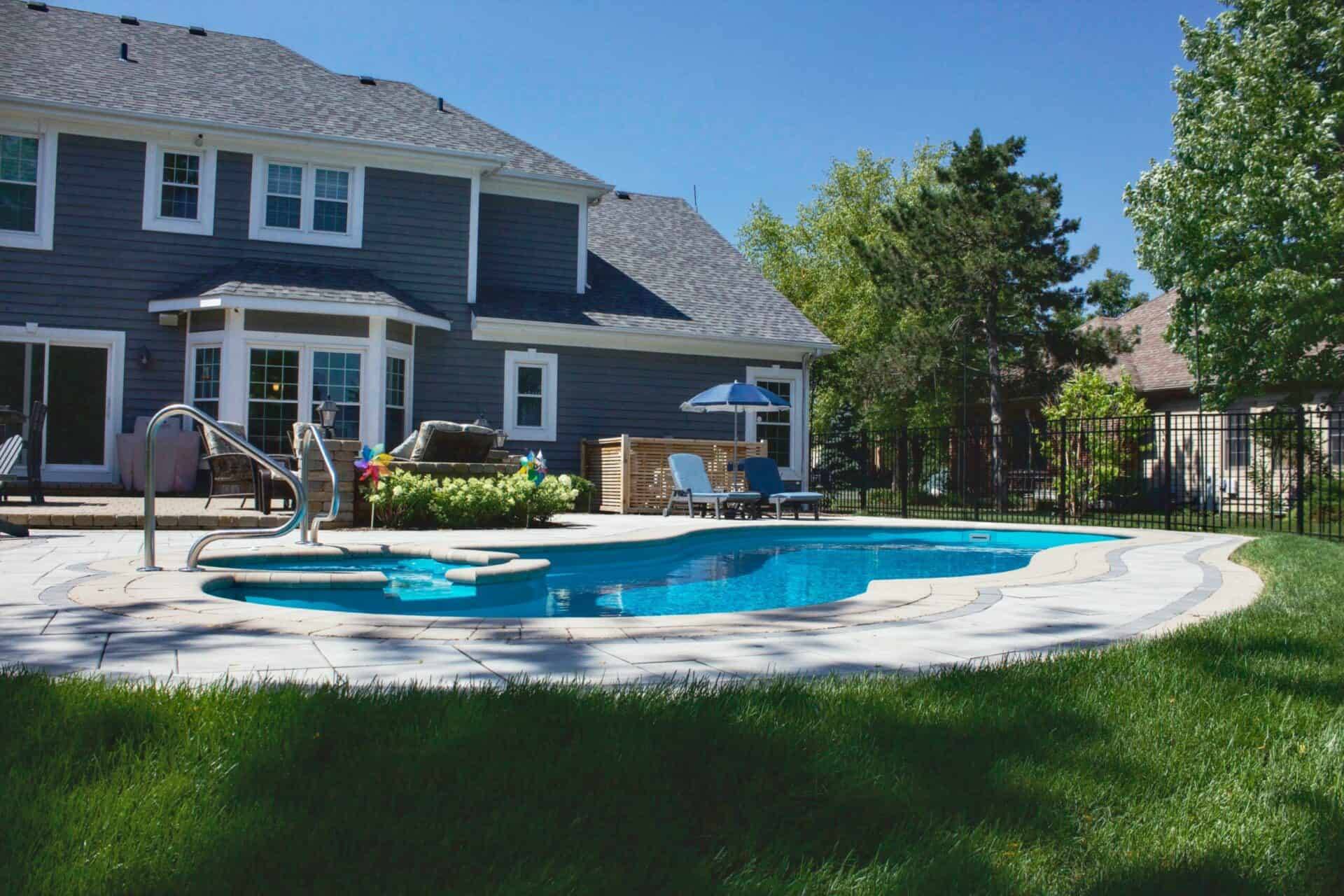
Illinois weather tips the balance toward flexibility: a shell that moves with freeze-thaw cycles has a real advantage in a climate where the ground heaves every winter. Manufacturer guides describe fiberglass as accommodating that movement rather than resisting it, provided the base and backfill are built to drain.
The short season cuts the other way. A fiberglass build window measured in weeks matters more here than in a warm climate, because the difference between a spring placement and a midsummer one can be an entire swimming season. Winterizing is also part of ownership in this region for every pool type, and a separate guide covers how fiberglass handles cold weather in detail.
The honest summary is that Illinois does not change which side of the ledger each item sits on. It makes the flexibility and the build speed count for more, and it makes correct backfill non-negotiable.
How do you weigh these tradeoffs for your own yard?
Weigh the tradeoffs against the property, not against each other in the abstract: access for delivery, soil and groundwater, the way the pool will actually be used, and whether a catalog form or a custom pour matters more to you. A family that wants a rectangle for laps and a ledge for small children has an easy decision. A sloped lot with no side access has a harder one.
That is where the conversation moves from material to fit: which shell suits the site, how it is delivered and set, what the deck and drainage plan look like around it, and what the construction sequence becomes once those facts are known. The fiberglass installation page takes up exactly that question, and it is the natural next step once the tradeoffs here are clear.
Sources: NerdWallet (2025); SKIN Microplaster (2026); HomeAdvisor, inground pool cost and installation time
Ready to weigh fiberglass for your own property?
The installation page explains how a specific shell is fitted to a specific site, which is where these tradeoffs stop being abstract and a consultation can begin.