Pool Safety
Pool safety · Guide
Pool fence materials compared: aluminum, glass, mesh and iron
Almost every pool fence built in the Chicago suburbs is aluminum, wrought iron, tempered glass or removable mesh, and each trades cost, upkeep and view differently. This guide compares them side by side so the choice is clear before an inground pool fence is laid out and checked against code.
Pool fence materials trade cost, upkeep and view: aluminum balances them, wrought iron adds ornament and rust care, tempered glass keeps the view at the top published price band, and removable mesh is the storable budget option.
What types of fencing are used around residential pools?
Residential pool fencing comes in aluminum, wrought iron, tempered glass and removable mesh, and nearly every barrier a homeowner sees is among those or a combination at the gate. Wood and vinyl privacy fencing exist, but they are usually a yard fence that happens to enclose the pool rather than a pool safety fence chosen for the job.
Each type has a character:
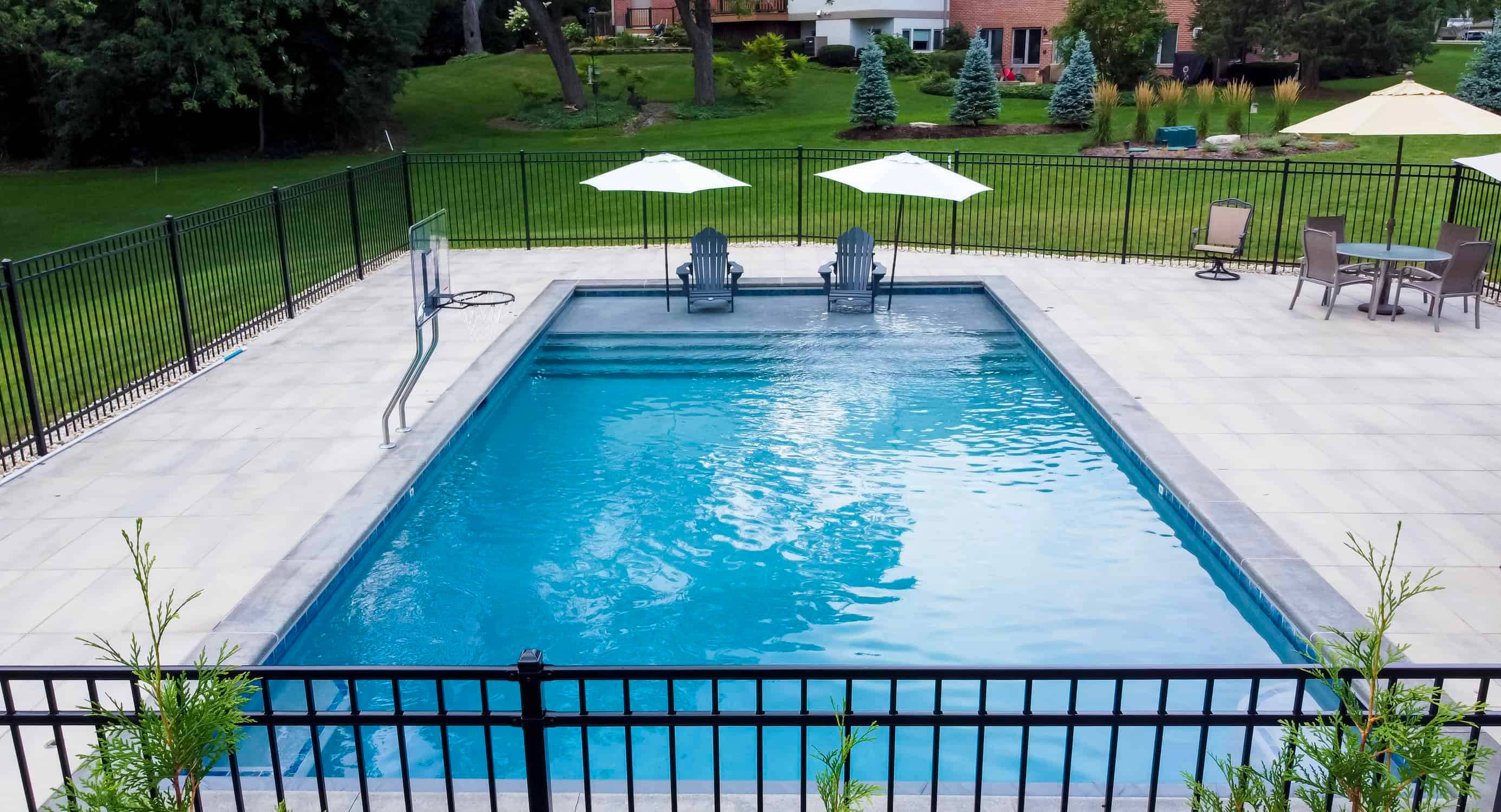
- Aluminum fencing: powder-coated pickets on posts, rackable to follow a slope, light enough to handle and stiff enough to meet code height without bulk. The default for most inground pools.
- Wrought iron fencing: heavier, ornamental, traditionally styled, with a finish that needs watching for rust over the years.
- Tempered glass panels: frameless or channel-set panels that keep the pool sightline uninterrupted, at the top of the cost range.
- Removable mesh fencing: tension poles in ground sleeves with a tight mesh weave, designed to lift out when the season ends or the children grow up.
Every one of them is sold with a self-latching gate as part of the system, because the gate is where inspections are most often failed.
How much does an aluminum or wrought iron pool fence cost per foot?
Aluminum and wrought iron fencing sits in the middle of the published range, close together, with iron edging higher for its weight and finish. Fixr (updated Jan. 2025) prices installed aluminum pool fencing at $15 to $35 per linear foot and wrought iron at $15 to $40, against $10 to $30 for removable mesh and $95 to $210 for glass. Those are national planning bands, not a local quote and not a Wave price; confirm a site-specific figure with an installer.
The overlap between aluminum and iron is real at the low end, and the difference shows at the high end, where ornamental iron work, finials and custom gates push the price. Over the years the gap widens in iron's favor for looks and in aluminum's favor for cost: aluminum's powder-coated finish protects the metal from corrosion with little attention, while iron needs periodic rust maintenance, especially where snow sits against the bottom rail through a Chicago winter.
For most families the decision between the two is the house style, not the price.
What makes a glass pool fence and a mesh pool safety fence different?
Glass and mesh are the opposite ends of the range, and they answer opposite questions: glass asks how to keep the fence from interrupting the view, mesh asks how to keep the fence from being permanent. Everything else about them follows from that.
Tempered glass panels are set in stainless spigots or a channel, with or without a slim top rail, and the pool sightline stays open from the house, the patio and the kitchen window. The cost comes from the panels, the hardware and the precision of setting; a panel out of line is visible across the yard, and a cracked panel is replaced, not repaired. Glass shows water spotting and needs a wash, but it does not rust, warp or fade.
Removable mesh fencing is the budget-friendly, storable option: poles drop into sleeves, the mesh stretches between them, and the whole barrier lifts out for an event or the off-season, with caps over the sleeves. The category has its own published design and performance specification, ASTM F2286 (reapproved 2023), whose stated scope is performance and design requirements for removable mesh safety barriers meant to reduce injuries and deaths among infants and young children; ask the seller to show the rating for the exact system, gate included.
What code requirements apply no matter the material?
No matter the material, a pool fence has to meet the same requirements: a minimum height measured from the outside, openings small enough that a child cannot pass through or under, non-climbable design with no footholds or handholds, and a gate that closes and latches on its own with the latch out of reach.
CPSC's Pool Safely program recommends a non-climbable fence at least four feet high, fully surrounding the pool; that is general safety guidance, not a substitute for the local code minimum, and the local code is what the inspector carries. Mount Prospect's current fence ordinance (Municipal Code 14.318) carries the village's published swimming-pool fence provisions, which apply regardless of material; confirm the current text rather than citing a fixed number, because the current municipality and the approved plan control.
Material changes how those rules are met, not whether they apply:
- Aluminum and iron: picket spacing and any horizontal rail placement decide climb resistance.
- Glass: panel gaps and the top-of-panel height decide it, with no rails to climb at all.
- Mesh: weave tightness, pole spacing and bottom-edge clearance decide it, plus the rating for the system.
The self-latching gate is common to all of them and is the component to check first.
Which is the best pool fence for a Mount Prospect backyard?
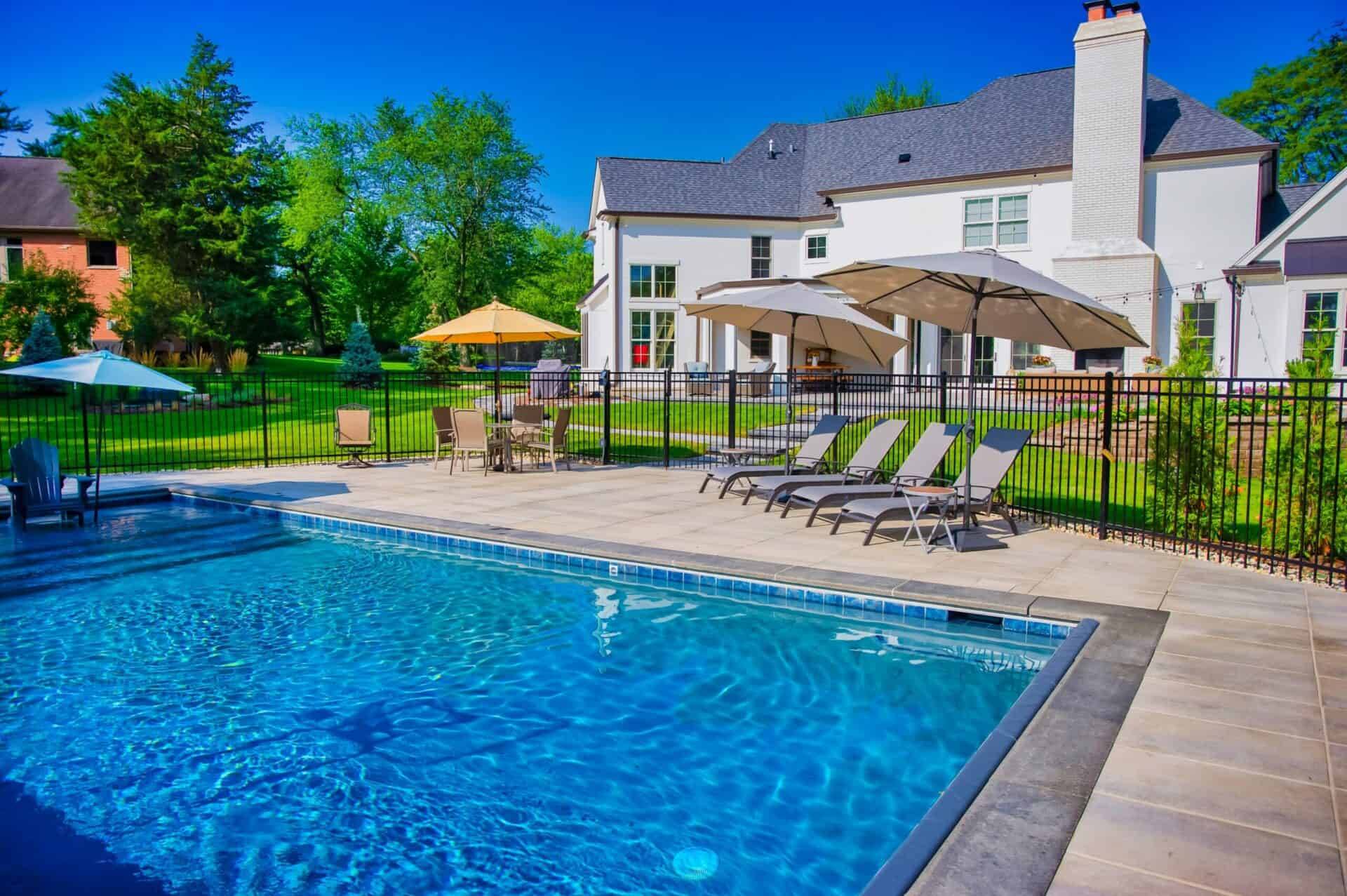
For a Mount Prospect backyard, aluminum suits most yards, glass suits a modern deck where the view is the point, iron suits a traditional brick home, and mesh suits a young family or a seasonal pool. Chicago-area winters shape the choice more than they would in a warm climate: freeze and thaw, snow against the bottom rail, and a fence that stands empty for months of the year.
Aluminum is the all-season workhorse; its finish ignores the cold. Iron is handsome but wants its finish inspected each spring. Glass is untroubled by frost yet needs cleaning after a winter of grime. Mesh avoids winter entirely by coming out, which is a real advantage on a pool that stays covered for much of the year.
Style fit follows the house and the hardscape already in place: match the fence to the patio, the retaining walls and the pergola rather than to the pool alone, and the yard reads as one composition.
How do you decide between the materials?
The decision comes down to ranking view, upkeep and budget for your household and letting the material fall out of that ranking. View first points to glass; upkeep first points to aluminum or mesh; budget first points to mesh, then aluminum.
A homeowner who weighs an open view against installation cost usually lands on aluminum with slim pickets, which keeps most of the view at a fraction of the glass price. A family with toddlers and a plan to open the yard up later lands on mesh. A traditional home with iron railings on the porch lands on iron.
What the comparison cannot settle is the layout: where the fence line runs, how the material meets the deck and the existing fence, where the gate sits, and how the whole plan is prepared for the village permit and sign-off. That is what the pool fence installation page covers next. Its decision is how a professional layout takes the material chosen here and delivers a barrier that passes inspection the first time.
Sources: Fixr (2025); U.S. CPSC Pool Safely (checked 2026); ASTM International, F2286 (reapproved 2023); Mount Prospect Municipal Code section 14.318 (current edition, checked 2026)
Ready to place your material in a real layout?
The installation page covers how a professional layout sets whichever material you choose to the village code and carries it through inspection. Continue there when the comparison is done.