Pool Safety
Pool safety · Guide
Pool fence ideas that meet code and keep the view
A pool fence does not have to be the first thing anyone notices in the yard, and the best ideas start from the view you want to keep. This guide walks through styles, finishes and landscaping fit before a pool safety fence is laid out and checked against code.
Pool fence ideas start from the view: glass keeps an open sightline, aluminum or iron pickets in a matching finish blend with existing railings, and removable mesh disappears off-season, while every idea must still clear the current code.
Which pool safety fence ideas keep the view open?
Frameless glass panels keep the view open best, followed by aluminum or iron pickets with slim posts, and then removable mesh, which is nearly transparent from a distance and gone entirely off-season. Each keeps the water visible from the house and the patio, which matters for supervision as much as for looks.
Glass panel fencing is the reference for an open sightline: tempered panels set in spigots or a slim channel, with no top rail and hardware finished to disappear. It suits a modern pool deck, a small yard where a solid fence would feel like a wall, and a family that wants to see the water from the kitchen. The premium is real: Fixr (updated Jan. 2025) prices installed glass pool fencing at $95 to $210 per linear foot, well above aluminum's $15 to $35, and that is a national planning band, not a local quote.
Aluminum picket fencing is the quieter option. Narrow pickets, a flat top and a dark powder coat read as a line rather than a barrier, and the eye goes through it to the pool. A wrought iron fence does the same with more weight and an ornamental top, which suits a traditional house.
Mesh is the disappearing act: fine black mesh on slim poles, invisible from the street and lifted out when the season closes.
How do color and finish tie the barrier to the rest of the yard?
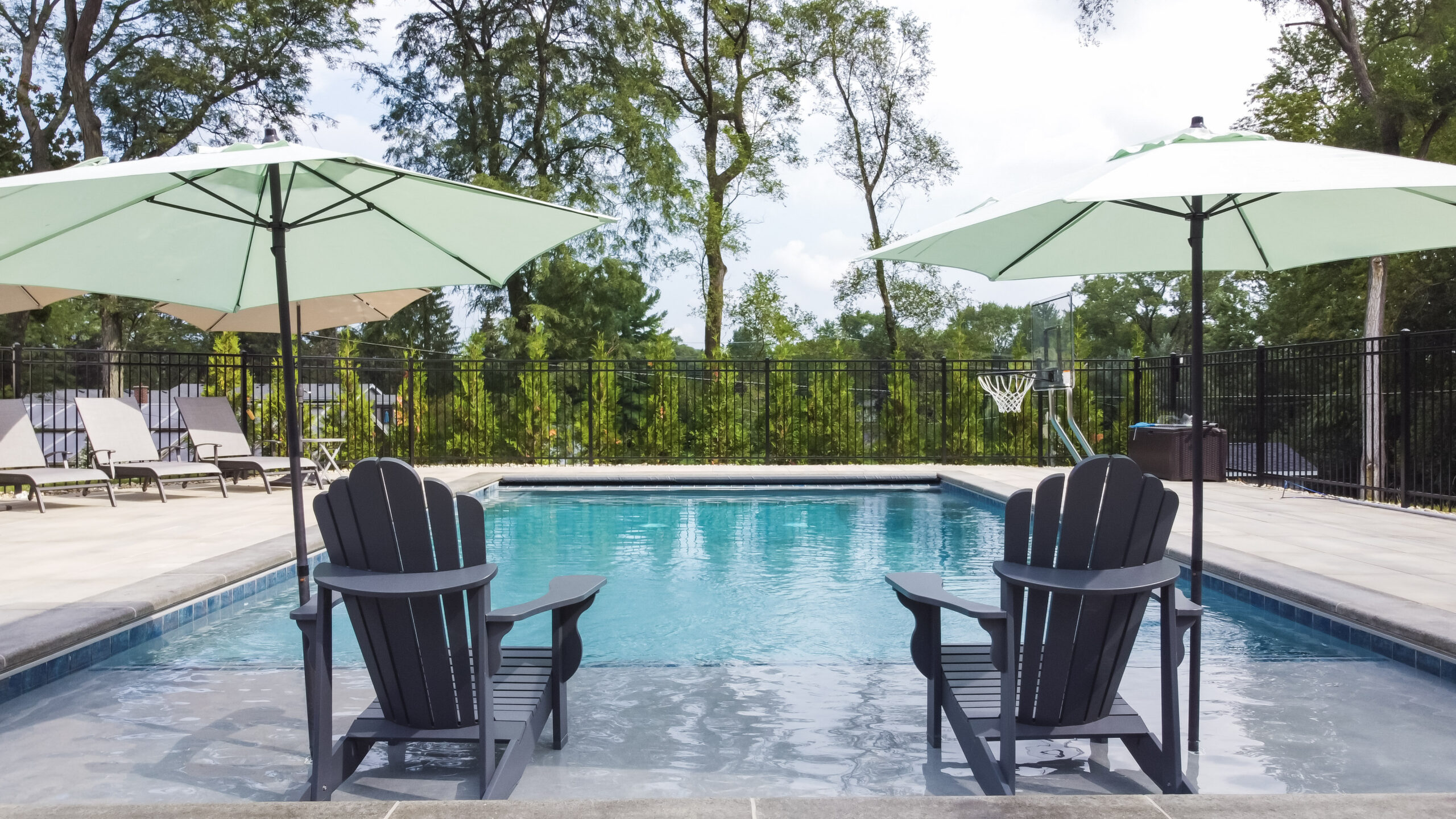
A fence belongs in the yard when its color and finish repeat something that is already there: the deck railing, the window frames, the pergola posts or the house trim. The fence is rarely the most important object in view, so it should borrow its finish rather than announce a new one.
Practical pairings:
- Match the powder coat color to the existing deck railing or the pergola, so the fence reads as a continuation rather than an addition.
- Choose gate latch and hinge hardware in the same finish as the fence, and in the same family as door hardware on the house.
- On glass, match the spigot finish to outdoor lighting fixtures or furniture frames: stainless with stainless, black with black.
- Keep the gate the same style as the fence; a heavier gate frame in a lighter fence is the detail people notice.
A matching hardware finish is the idea that most often separates a fence that looks installed from one that looks designed.
Can a low-profile design still meet code?
A low-profile design can meet code only down to the minimum height the governing municipality sets, and no lower; the look can be slim, but it cannot be short. Mount Prospect's current fence ordinance (Municipal Code 14.318) carries the village's published swimming-pool fence provisions, and the current text and the approved plan control the height figure rather than any number quoted here or elsewhere.
Non-climbable design is the second limit on a decorative idea. CPSC's Pool Safely program recommends a non-climbable fence at least four feet high, fully surrounding the pool; that is general safety guidance, not a substitute for the local code minimum. In design terms, it rules out horizontal rails on the outside face, lattice with openings a foot can fit, decorative scrolls that form a ladder, and planters or benches placed against the fence.
So a low-profile look is achieved by slimness rather than height: thinner pickets, no visible top rail, dark finishes that recede, glass instead of metal, and a fence line pulled close to the deck so it reads as an edge rather than an enclosure.
Modern or rustic: which fence ideas suit a Mount Prospect pool?
For a Mount Prospect pool the ideas that work, modern or rustic, are the ones that survive every season: finishes that shrug off freeze and thaw, a line that suits a yard with mature trees and an existing hardscape, and a style that matches the northwest suburbs' mix of traditional and newer homes.
Durable finishes come first. A powder-coated aluminum picket holds its color through winter with no attention; wrought iron needs its finish watched for rust where snow sits against it; glass is unaffected by cold but shows salt and mineral spotting, so it wants a hose in spring. Mesh sidesteps winter entirely by coming out.
Style fit follows the house. A brick colonial takes a black iron picket with a simple finial; a newer transitional home takes flat-top aluminum in charcoal; a modern build takes glass or a flat black picket so thin it reads as a line; a rustic yard with a cedar pergola takes plain black pickets set between cedar posts, with the rails on the pool side so the outside face stays smooth. In every case, pair the fence with the existing patio and retaining walls rather than the pool alone, so the poolscape reads as one composition.
How do landscaping and privacy pool fence ideas work together?
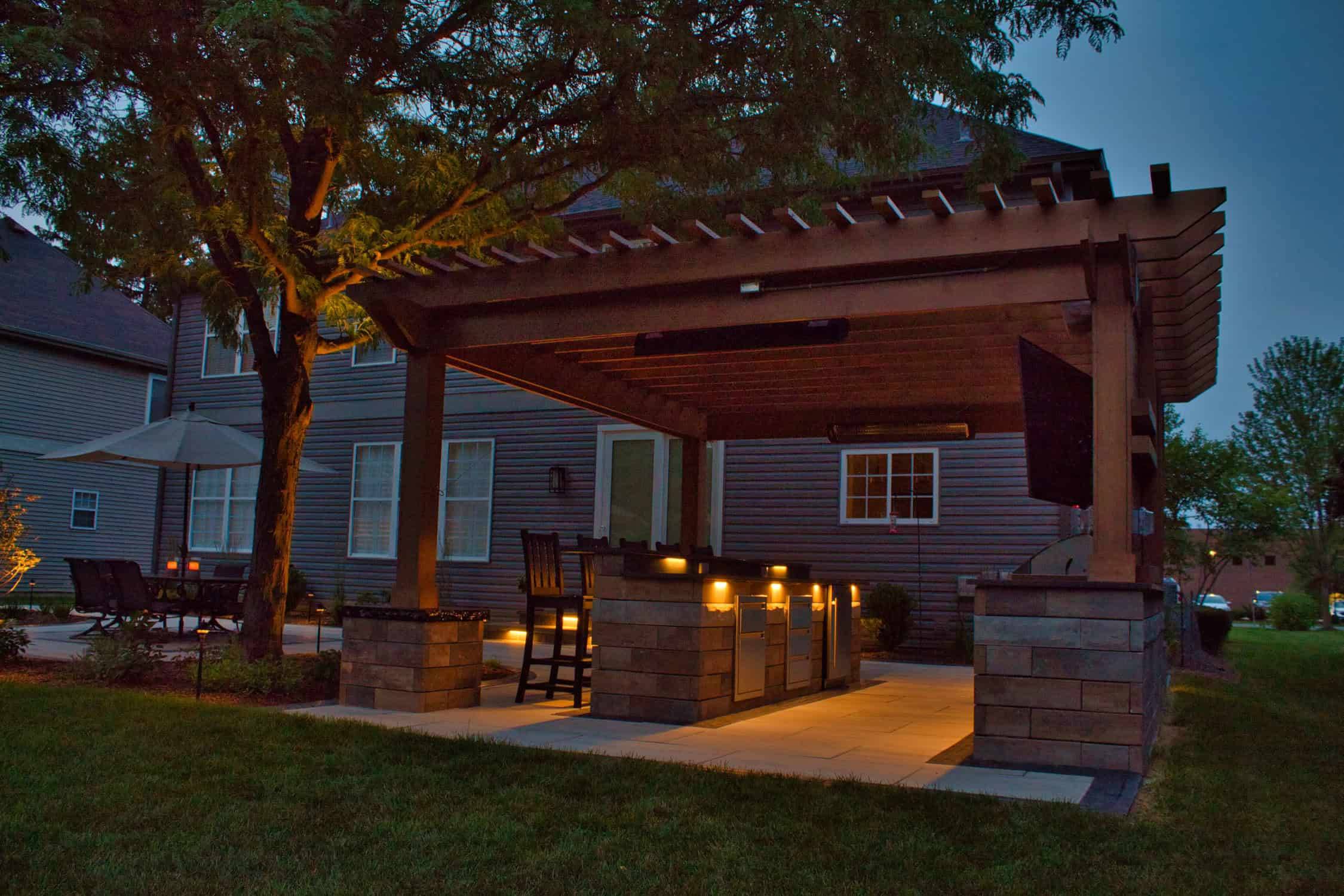
Landscaping style decides whether the fence should disappear, frame the view or become part of the planting, and privacy comes from the planting and the property-line screen rather than from the pool barrier itself. A formal yard with clipped hedges and symmetrical beds is framed by an iron or aluminum picket; a naturalistic yard with grasses and layered perennials is best served by glass or mesh that lets the planting be the edge; a minimal modern yard with a large paver deck wants glass and nothing else.
Plants also do quiet work. A low hedge on the outside of a picket fence softens the line without creating a foothold, provided it is kept below climbing height and clipped away from the fence face. Taller planting belongs inside the fence, where it screens the neighbor without helping a child over.
Privacy ideas follow the same split. A solid board screen on the property line, or a run of tall grasses inside the barrier, gives the pool its privacy while the barrier itself stays open and non-climbable; a solid privacy fence can also serve as the barrier when it meets the height and gate rules with its rails on the inside, but a screen leaned against a picket fence is a ladder.
Whatever the style, the fence height requirement and the non-climbable rule sit underneath every idea; the landscaping chooses the material, the code sets the envelope.
Where do the ideas fit before installation begins?
Pool fence ideas belong at the very start, before the fence line is drawn, because the material and style chosen here decide the post spacing, the gate frame, the hardware and the way the fence meets the deck. Deciding the look after the layout is how a family ends up with the right fence in the wrong place.
Once the look is settled, the work moves to the layout: where the fence line runs, where the gates sit, how the chosen material clears the village's height and climb rules, and how the drawings are prepared for the permit. That is what the pool fence installation page covers next: how a professional layout keeps the design chosen here intact while the barrier is approved the first time.
Sources: Mount Prospect Municipal Code section 14.318 (current edition, checked 2026); U.S. CPSC Pool Safely (checked 2026); Fixr (2025)
Ready to turn the look into a code-ready layout?
The installation page covers how a professional layout keeps the style you chose while meeting the village code and passing inspection. Continue there when the look is settled.