Pool Safety
Pool safety · Guide
How much does a pool fence cost?
Pool fence cost is one of the few pool numbers that national guides publish in a usable form, by material and by the linear foot. This guide lays those bands out so you can budget with clear eyes before swimming pool fence installation turns a range into a site-specific figure.
Pool fence cost is published by the linear foot and by material, with removable mesh in the lowest band, aluminum and wrought iron in the middle and glass at the top, before perimeter, gates and permit set the total.
What is the cost of a pool fence per linear foot?
Per linear foot, a pool fence costs the least as removable mesh, more as aluminum or wrought iron, and by far the most as tempered glass, which is why national guides publish the number as a band per material rather than a single figure. Fixr (updated Jan. 2025) prices installed pool fencing from about $10 per foot for removable mesh up to $95 to $210 per foot for glass, depending on material, with aluminum and wrought iron in between.
Linear-foot pricing is the industry's standard unit because it scales cleanly: measure the perimeter the fence has to enclose, multiply by the band, and the result is a planning figure before anyone visits the yard.
Those bands are not a local quote, because labor and materials in the Chicago suburbs differ from a national average, and they are not a Wave price; no third-party figure is. Use them to set expectations, then confirm with an installer.
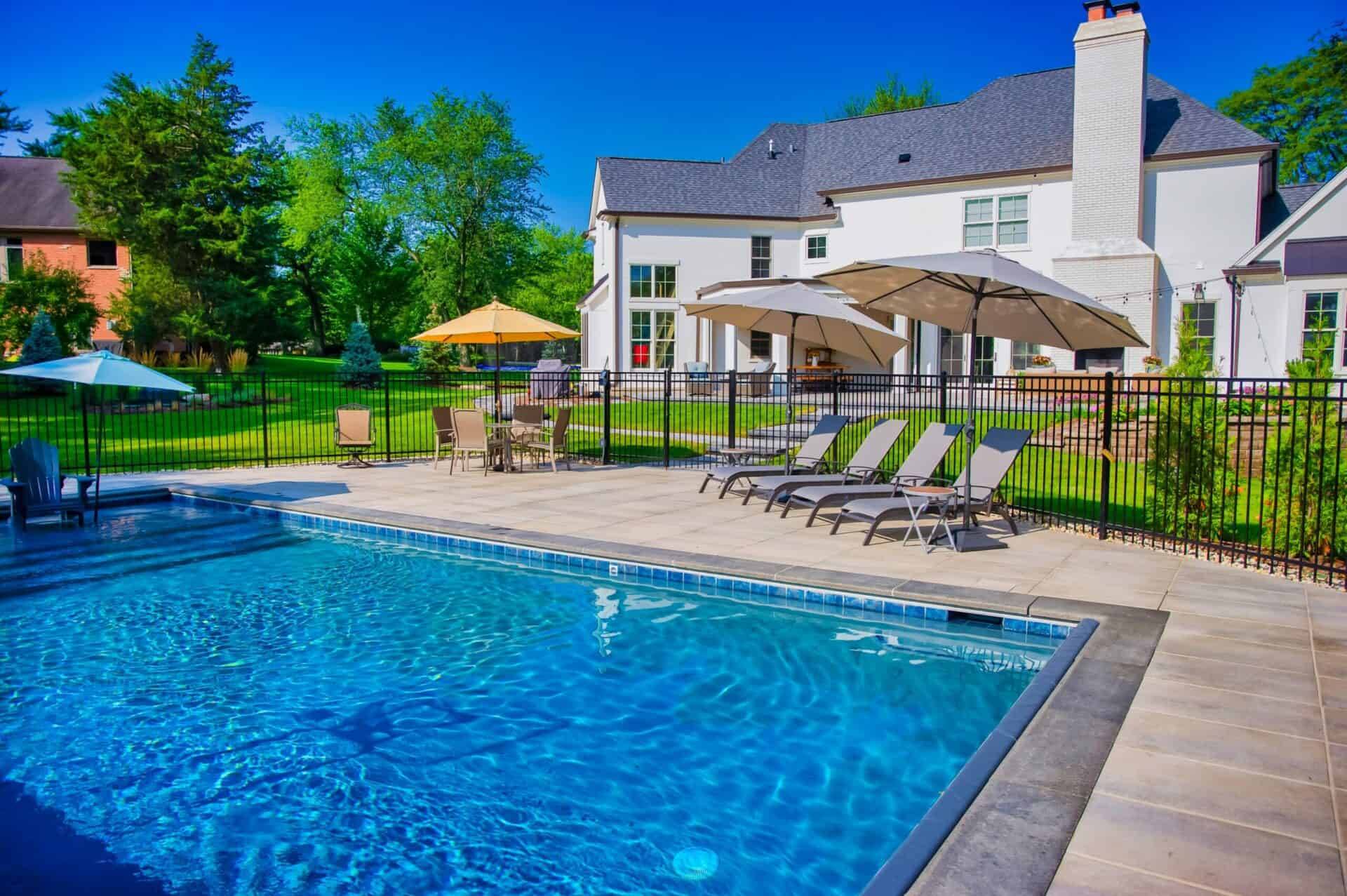
How much does a mesh, aluminum or glass pool fence cost?
Mesh is the least expensive band, aluminum and wrought iron sit in the middle close together, and glass is by far the most expensive, so material is the single largest lever on price. Fixr (updated Jan. 2025) lists installed bands of $10 to $30 per linear foot for removable mesh, $15 to $35 for aluminum, $15 to $40 for wrought iron, and $95 to $210 for glass or tempered-glass panels. As a whole project, Fixr (2025) puts a typical pool fence at $3,000 to $10,000, averaging about $6,500 nationally.
Reading those bands:
- Mesh fencing is the least expensive because the poles and sleeves are light and the mesh is inexpensive to produce; it is also removable, which some families count as value in itself.
- Aluminum fencing sits in the middle: powder-coated, low upkeep, and rackable to follow a slope, which keeps labor predictable.
- Wrought iron fencing edges above aluminum for weight and ornament, and carries a maintenance cost for the finish over the years.
- Glass fencing is the premium band because tempered panels, stainless spigots and precise setting are all expensive, and the reward is an uninterrupted view of the water.
A separate guide compares the materials in detail; here the point is that the band you choose sets the budget's order of magnitude before any other decision.
What else affects the total, beyond materials?
Beyond the material, the total is driven by yard perimeter, gate count, site prep and the permit, and each can move the number more than a change of material band would. The perimeter decides how many linear feet are needed: a fence that hugs the pool deck is shorter than one that follows the property line, and shorter is cheaper.
The line items an installer typically prices separately:
- Gate hardware: every gate adds a frame, self-closing hinges and a self-latching latch, so a layout with a second gate for the mower costs more than one gate near the house door.
- Site prep: grading a slope, cutting into a paver patio, removing an old fence or working around tree roots all add labor.
- Installation labor: most guides separate labor from material, and labor rises with difficult access or hard ground.
- Permit fee: a separate municipal line item, not a fence cost. Ask the local building department for the current fee.
The permit is easy to forget in a total project budget because it is small next to the fence, but it is also the item that cannot be skipped.
What should a Mount Prospect homeowner budget for?
A Mount Prospect homeowner should budget for the fence, the gate or gates, the site work the yard needs and the village permit, then hold a margin for the difference between a national band and a local quote. Chicago-area labor rates can sit above or below a national average, and northwest-suburban yards often include a patio, an existing fence or a grade change that a flat national example does not.
For an above-ground pool the budget looks different, because the barrier may be a deck rail and a ladder gate rather than a full perimeter. Real Homes (2021) puts an above-ground pool fencing addition at $1,500 to $10,000 as a national planning range. This Old House's inground pool cost guide likewise treats fencing as its own planning line alongside the heater, lighting and deck, which is the right way to see it: a line in the pool budget, not an afterthought.
Whatever the range, the current municipality and the approved plan control the fence height and hardware that drive the cost, so confirm those before pricing materials.
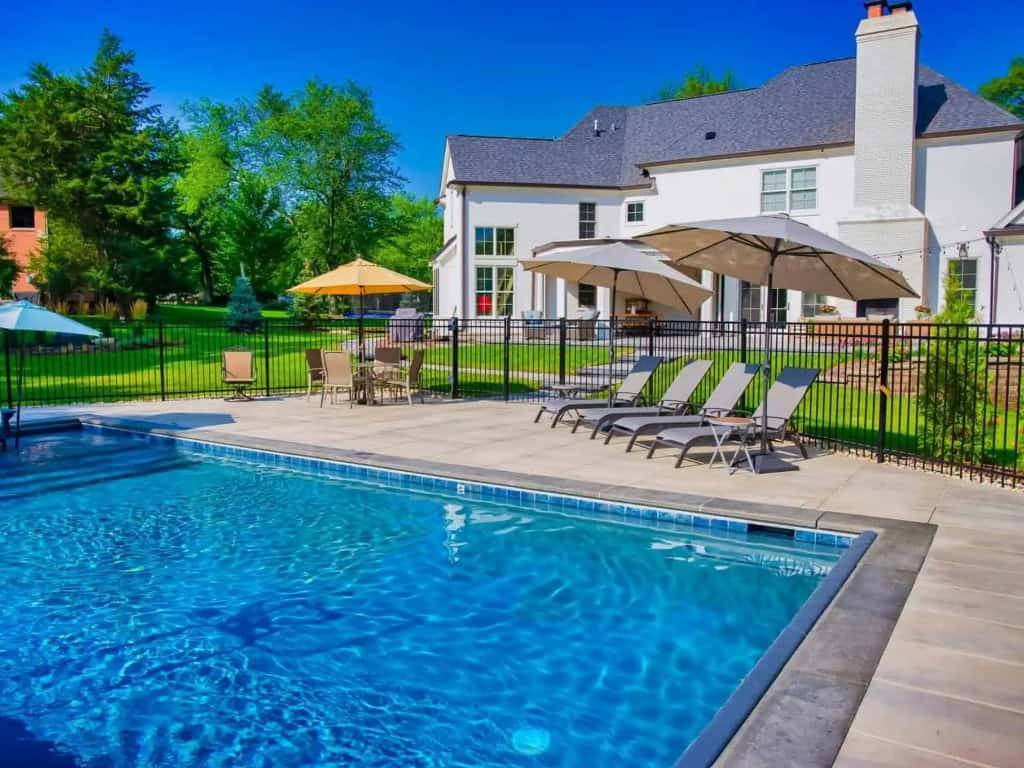
How does pool safety fence installation cost compare with a DIY kit?
Professional installation costs more up front than a homeowner-installed kit, mainly because it includes the labor, layout and inspection handling that a DIY job leaves to the owner. The published bands quoted above are installed figures, so a homeowner buying a mesh kit and setting it personally spends less than the band suggests, in exchange for the time and the risk of a failed inspection.
That is the whole cost delta in one line: the saving is the labor, the cost is the responsibility. Whether DIY is realistic for a given fence type, and what the permit and inspection actually require, is a separate question with its own guide.
Which approach is the most economical in the end?
The most economical fence is the fence that passes inspection at the initial visit, because a failed inspection, a re-drilled sleeve line or a gate re-hung after the fact costs more than any material saving. Economical does not mean cheapest; it means no money spent twice.
Getting there is a layout question rather than a shopping question: which material fits the yard and the family, where the fence line runs to keep the linear feet down, how many gates are truly needed, and how the plan is prepared for the village permit. That is what the pool fence installation page covers next. Its decision is how a professional layout turns the planning range on this page into an approved barrier, priced for the actual yard.
Sources: Fixr (2025); Real Homes (2021); This Old House (checked 2026)
Ready for a figure that fits your yard?
The installation page covers how a professional layout sets the fence line, gate count and hardware that decide the real number. Continue there when you are ready to plan.