Pool Safety
Pool safety · Guide
Fencing an above-ground pool: deck-mounted and ground options
An above-ground pool changes the fencing question, because the pool wall, the deck and the ladder each become part of the barrier. This guide walks through the deck-mounted and ground-set options so you know what to expect before code-compliant pool fence installation turns the choice into a layout.
An above-ground pool can meet the barrier requirement through its wall plus a self-closing, self-latching ladder or deck gate, or through a standalone fence around the structure, with the local code and approved plan deciding which applies.
Do you need a fence for an above ground pool?
An above-ground pool needs a barrier like any other pool, and its own wall can form part of that barrier when the wall stands tall enough from the outside grade and every way up into the water is controlled by a gate or ladder that closes and latches by itself. That is the wall-plus-access-point logic: the structure keeps a child out, the ladder, deck stairs or gate is the only opening, and the hardware on that opening does the work a fence gate would do on an inground pool.
An inground pool sits at grade, so a fence has to surround it; an above-ground pool already stands above the yard, which is why the wall can be treated as part of the enclosure once the access point is secured. Whether a specific wall, deck and ladder qualify is decided by the current municipal code read against the approved plan. If the ladder stays down and unlatched, the wall is not a barrier; it is a step.
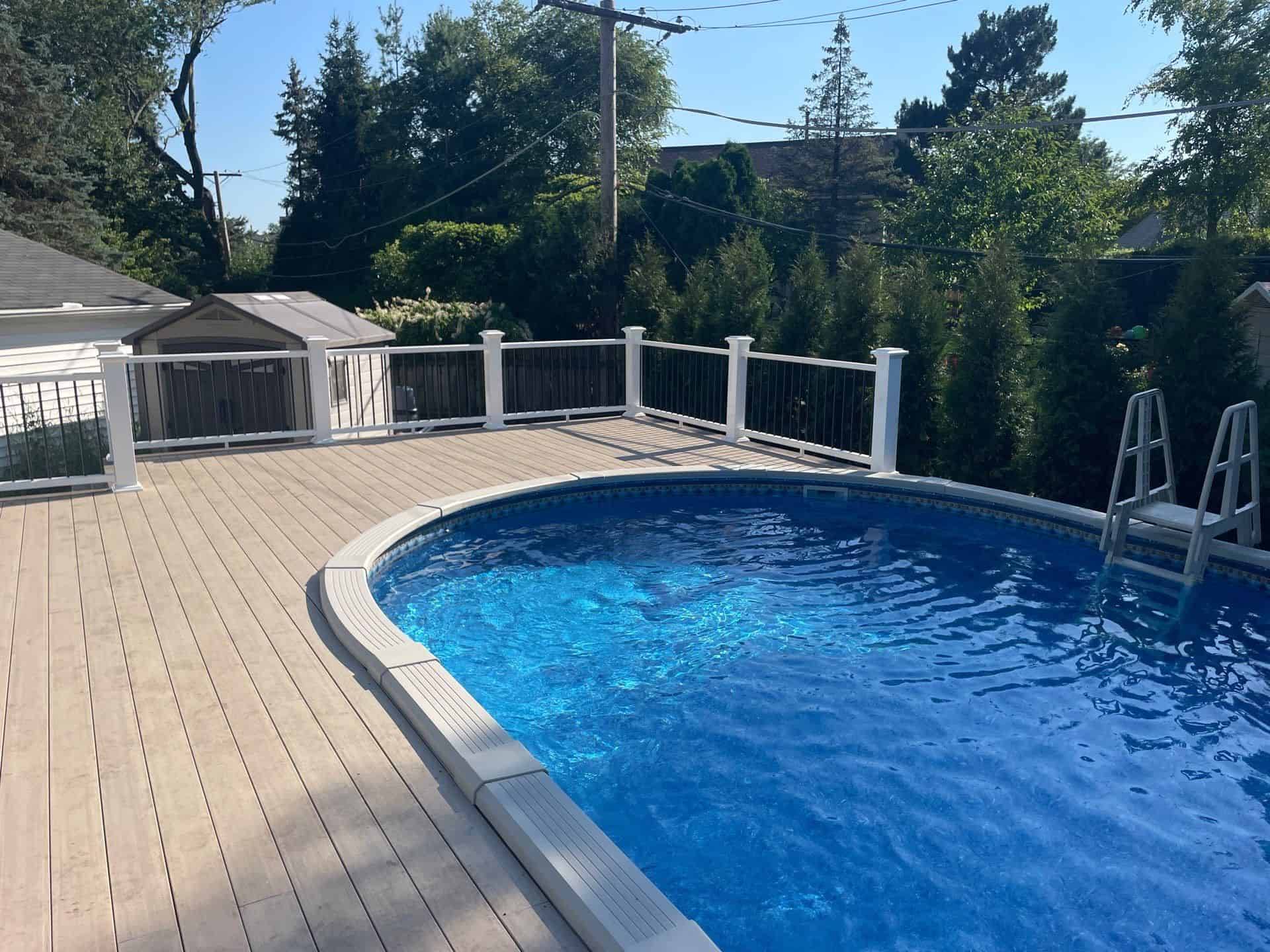
When does a standalone perimeter make more sense than the wall?
A standalone ground fence is needed when the pool wall, or the deck built around it, does not reach the barrier height the village requires from the outside grade. Once a deck wraps the pool, the deck edge becomes the thing a child could climb, and if the deck sits lower than the code minimum, or the railing has gaps a small body could pass through, the wall alone no longer qualifies.
A few situations push most owners toward a full fence:
- A low pool wall, or a semi-inground installation with part of the structure below grade.
- A wraparound deck at or near grade, with stairs that cannot be gated off cleanly.
- A pool close to a property line or a neighbor's play area, where the family wants the perimeter security an inground pool would have.
The ground-set fence is then inspected like any pool safety fence: height from grade, non-climbable design, and a self-closing, self-latching gate. Cost runs higher than a ladder gate alone; Real Homes (2021) puts an above-ground pool fencing addition at $1,500 to $10,000 as a national planning range, and a site-specific figure comes from the installer, never from a guide.
Above ground pool privacy fence ideas that add security without failing inspection
A privacy fence around the pool can double as the barrier when it is built to barrier rules: solid board or panel fencing with the horizontal rails facing the pool side, a height that meets the code from the outside grade, and a self-closing, self-latching gate. Ideas that hold up: any lattice top kept well out of a climbing child's reach, and planting set back so a shrub never becomes a step. What fails: an open top rail a child can grab, a gap under the bottom rail, or a gate that closes only when someone pushes it.
How do deck-mounted rails and ladder gates work together?
Deck-mounted rails and a ladder gate form a single continuous barrier: the rail runs the deck perimeter at the required height, and the gate closes the single opening where the ladder or stairs meet the deck. The rail posts mount to the deck framing rather than to the pool shell, so the wall carries no load.
The sequence is usually the same: the deck is checked for structural capacity at each post, rail sections are set with no footholds on the outside face and no gaps a child could squeeze through, the self-closing gate is hung to swing outward with its latch out of a small child's reach, and the ladder is either fixed inside the gated deck or made removable. A stored ladder is a useful extra layer, because there is then no route up the wall at all.
What are the above ground pool fence requirements for a deck safety rail?
The requirements on a deck safety rail follow the same barrier logic as a ground fence: height taken from the surface the code names, no opening a small child could pass through, no horizontal members on the outside face that turn the rail into a ladder, and a gate that closes and latches on its own. The exact inch figures come from the current municipal code and the approved plan.
What does Mount Prospect code measure on a deck-mounted barrier?
What gets measured on a deck-mounted barrier is the height of the top of the rail above the ground a child approaches from, the size of any opening in or under the rail, and the self-closing, self-latching action of the gate. Mount Prospect's current fence ordinance, Municipal Code section 14.318, carries the village's published swimming-pool fence provisions and sets the figures for each of those elements, and the approved site plan is the reference the inspector works from. A rail that looks tall from the deck surface can measure short from the lawn, which is why the measuring point matters most on a deck. The practical steps are:
- Identify the governing municipality; a neighboring village may read the same deck differently.
- Verify the current height, opening, clearance and gate-hardware rules from that code, not from a spec sheet.
- Use the approved plan and the current inspection requirements as the final reference before the posts go in.
A number quoted for another suburb settles nothing; the current municipality and the approved plan control.
What other layers help beyond the barrier itself?
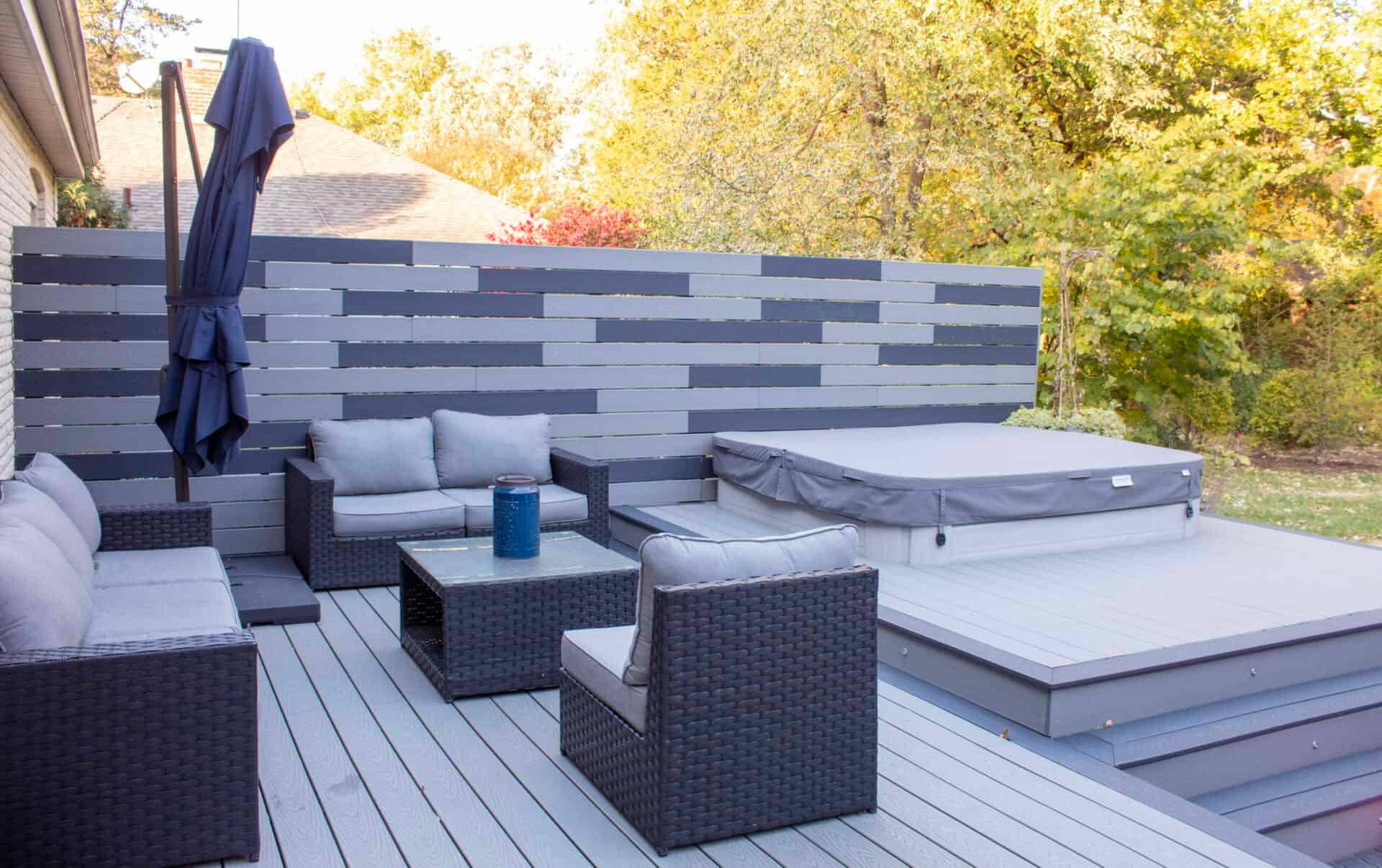
A cover, an alarm, a locked ladder and an adult who is watching each add protection the barrier alone does not provide. CPSC's Pool Safely program names barriers, covers, alarms, and active supervision as complementary layers of protection, and none of them replaces another. For an above-ground pool the layers look like this:
- A secured cover that fits the pool, used whenever the pool is closed for the day; a companion layer, not a substitute for the barrier.
- A pool alarm on the gate or in the water, so an opened gate or a disturbance is noticed.
- A removable ladder stored away from the pool, or a locking ladder fixed inside a gated deck.
- Active supervision: an adult assigned to watch the water, without a phone pulling attention away.
How do you decide which barrier approach fits your yard?
The deck decides most of it: a deck that fully wraps the pool and stands well above grade usually makes a deck-mounted rail with a gated ladder the cleaner solution, while no deck, a low deck or a semi-inground wall makes a standalone fence the safer assumption. Then check the yard: a sloping lawn, a climbable fence line nearby, or a play structure within reach of the wall all argue for a full perimeter.
Whichever way the answer leans, the wall, deck rail or standalone fence has to be tied to the village code and drawn onto a plan that can pass inspection. That is what the pool fence installation page covers next: how a professional layout chooses the barrier line, sets the gate positions and prepares the permit drawings.
Sources: Mount Prospect Municipal Code section 14.318 (current edition, checked 2026); U.S. CPSC Pool Safely (checked 2026); Real Homes (2021)
Ready to turn the barrier choice into a layout?
The installation page covers how a professional layout ties the wall, deck rail or standalone fence to the village code and the permit. Start there when you are ready to plan.