Pool Cost Planning
Pool cost · Guide
Inground pool cost by size: how a footprint becomes a budget
A pool's footprint is the first number most people fix on and the least reliable one to budget from. This guide explains how size actually turns into inground pool prices, so the figure you plan around reflects your yard rather than a chart.
Inground pool cost by size rises with gallonage, deck perimeter, excavation volume and equipment sizing rather than with length times width, so pools with identical footprints can price far apart until a site visit fixes the number.
How much does a small inground swimming pool cost, and what sets its price?
A small inground swimming pool costs less than a larger footprint because it holds less water, carries less edge and needs smaller equipment, yet its price still spreads widely within the same footprint. Gallonage grows faster than the footprint suggests once depth is added. Deck perimeter grows with the pool's edge, not its area. Excavation grows with the volume of soil removed, which depends on the depth profile as much as on length and width. Equipment has to be sized to the gallonage, so a larger pool needs a larger pump, filter and heater, and those step up in price bands rather than smoothly.
NerdWallet (2025) shows how wide the spread is at every size: its national ranges run from about $10,000–$25,000 for a 10x20 pool up to $40,000–$100,000 for a 20x40 pool. Read the spread inside each size as the real lesson. The gap between the low and high end of one footprint is as large as the gap between footprints, because shell type, depth, decking and site work do most of the work in the final number, and none of them is a function of square footage.
12x24, 16x32 or 20x40 inground pool cost: what the sizes and prices mean
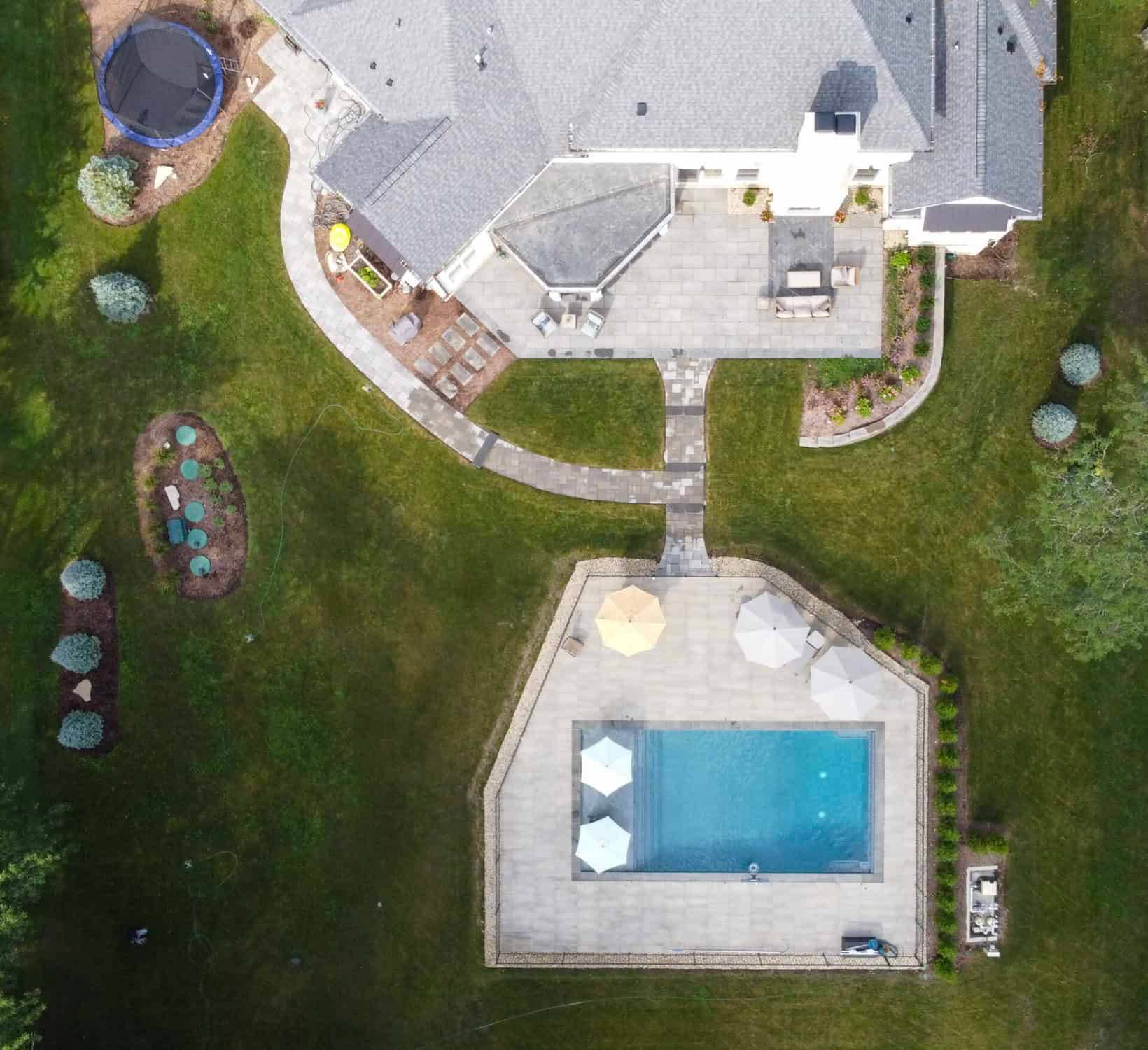
The familiar rectangular footprints are length and width in feet, and each pairing has settled into a role: a compact pool for a tight lot, a mid-size family pool, and a large pool with room for laps and a gathering. A 12x24 is the size that fits a typical suburban side yard or a modest rear yard while leaving room for a deck and planting; it suits a family that wants to cool off and float more than swim lengths, and the 12x24 inground pool cost conversation is usually about how much deck and how many features, not the shell. A 16x32 is the mid-size default, wide enough to swim side by side and long enough for a short lap, which is why so many published comparisons use it as their example. A 20x40 is a large family pool, the size at which a shallow ledge, a deep end and a swim lane can all coexist, and at which decking and fencing lengths become serious line items in any 20x40 inground pool cost discussion.
TheCPSA's size chart (2026) groups residential pools into compact, family and lap-pool categories, and HomeUpright (2026) reports typical residential size and depth categories; both are useful for vocabulary, neither for a price. Thursday Pools illustrates 16x32 cost formulas across vinyl, fiberglass and gunite as a source-attributed example, which is the right way to read any size-based figure: as an illustration, not a quote.
Why do gallonage and perimeter matter more than swimming pool cost per square foot?
Gallonage sets the equipment and the sanitizer load, and perimeter sets the deck, coping and fence, while square footage on its own prices almost nothing. Gallonage is length times width times average depth, converted to gallons, and it is the number the pump, filter and heater are chosen against. A deeper pool holds more water than its footprint suggests; a pool with a long shallow ledge holds less. Heater output in particular is sized to volume, so a deep 16x32 can need a larger heater than a shallow 20x40. Chlorine dosing scales with volume too, which is why gallonage also drives running cost after the build.
Perimeter is the edge, and the edge is where the expensive finishes live. Coping runs the full perimeter. The deck typically runs the full perimeter at some width. The fence encloses the deck, not the pool, so its length grows with the deck's outer edge. Compare a 12x24 with a 16x32: the area grows faster than the edge does, yet every added foot of edge carries coping, deck and often fence, so the perimeter-driven lines climb alongside the shell. That arithmetic is why a 16x32 inground pool cost figure spreads so widely between two yards with the same shell.
Does shape change the size math?
Shape changes the size math because, at equal square footage, a freeform or L-shaped outline has more edge and more complex excavation than a rectangle, so coping, deck cutting and digging all cost more. A rectangle has the shortest perimeter for its area and the simplest deck layout, which is why it is the most economical outline to build and the easiest to fence. A freeform pool adds curves that lengthen the edge and require coping to be cut or cast to fit; the deck follows those curves, and so does the fence. An L-shaped plan adds a swim lane or a shallow wing, which adds inside corners to the excavation and the steel.
Shell material sets how free the outline can be. A fiberglass pool comes from a factory mold, so its shape and size are chosen from a catalog rather than drawn from scratch, and the price is tied to the model. A gunite pool is shot in place and can take any footprint the yard allows, at the cost of more site-built work. A vinyl-liner pool is built on a structural wall and is size-flexible within its panel system. The material pages on this site cover that comparison in depth; here the point is that outline and shell type together decide how much of the cost is edge.
What else changes the number besides size?
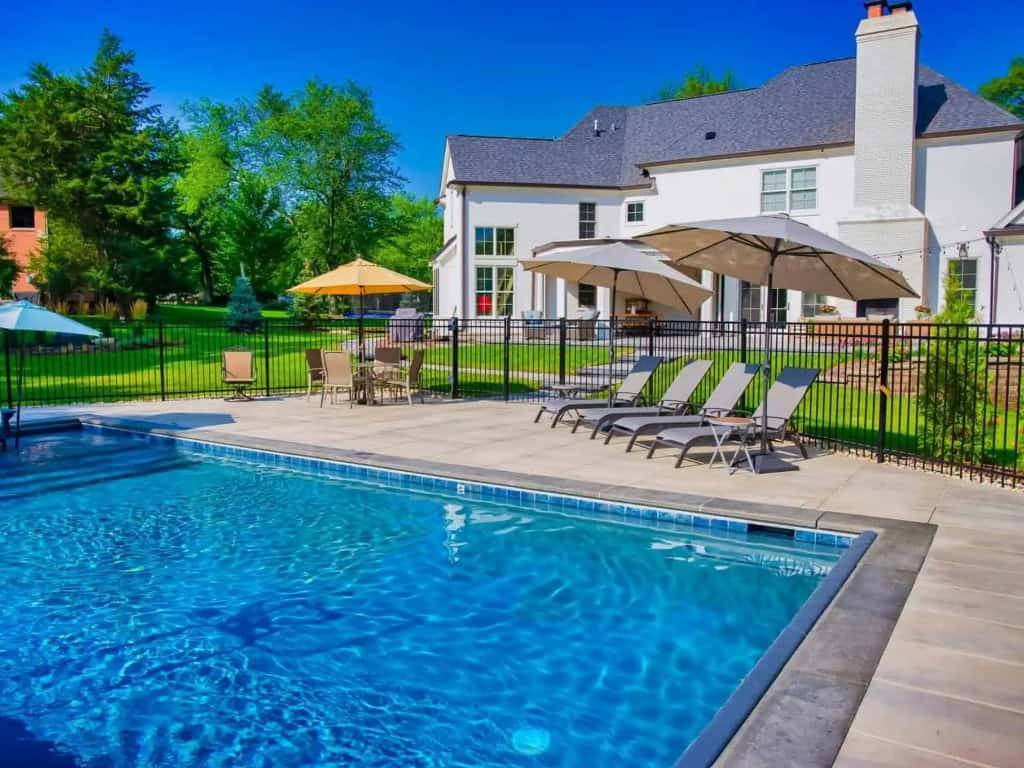
Depth, site access and shell material each change the price on their own, and any of them can matter more than the difference between neighboring footprints. Depth profile changes gallonage and excavation without touching the footprint: a pool with a deep end holds and removes far more than one with a uniform shallow depth, and a diving depth brings its own design standard and plan review. Site access decides which machines can reach the yard; a narrow side gate, a mature tree or a retaining wall can force smaller equipment and slower work, and on some Chicago-suburb lots it limits which sizes are realistic at all. Shell material shifts the base price and the construction schedule, and it is the one variable most people decide before they think about size.
Pools with identical dimensions can therefore arrive at very different numbers, and a quote based on square footage alone leaves out the perimeter-driven and volume-driven lines that make up most of the difference. When comparing same-size bids, match outline, depth and shell type first, then look at the price.
How does a footprint become a real number for your site?
A footprint becomes a real number through a site visit, where a builder measures access, checks the soil and grade, and matches the outline and depth you want to the yard that exists, before any figure is attached. That is the step the main inground pool cost page describes. It brings size together with shell type, site work, decking, fencing, utilities and features into a whole-project view for a Chicago-suburb yard, and it explains how a consultation turns those inputs into a number you can plan around. Come to it knowing why size is not a multiplier, and the figure it gives you will make sense line by line.
Sources: NerdWallet (2025); Thursday Pools 16x32 comparison (undated, checked 2026); TheCPSA (2026); HomeUpright (2026)
Ready to price your footprint against your site?
The main inground pool cost page shows how size, shell type, site work and features add up on a Chicago-suburb project, and how a consultation turns your footprint into a real number.