Pool Cost Planning
Pool cost · Guide
Cost to maintain a pool: what an inground pool costs to run each year
The price of building a pool is one number; the cost of running it is another, and the second one repeats every season. This guide covers the running side, so you can weigh it against the cost to build a pool before you commit to a design.
The cost to maintain a pool covers pump electricity, chlorine and balancers, refills and seasonal opening and closing every year, with pump age, cover use, heater use and season length deciding where a household lands inside published national ranges.
How much does pool upkeep cost, and what drives the yearly maintenance costs?
Pool upkeep costs a recurring sum each season for pump electricity, chlorine and balancers, refills and the spring and fall service events, and every other line on the bill is a variation on those. Electricity tends to lead, because the pump moves the entire volume of the pool through the filter every day of the season, and a heater, when it runs, sits on top of that. Sanitizer comes next: chlorine or its equivalent, pH and alkalinity adjusters, and the stabilizer that keeps chlorine working in sunlight. Refilling is the quiet line, since evaporation and filter backwashing both lower the level. Opening and closing are the fixed events that bookend the season.
Bob Vila (2024) puts general pool upkeep and supplies at $1,200 to $1,800 a year, with utility fees and potential repairs adding another $3,000 to $5,000, and budgets $20 to $60 a month for water. Treat those as national planning bands, not a forecast for any one yard. Pump age, cover use, heater use and the length of the season move a household well above or below them, which is why the same pool design can cost one owner far more to run than a neighbor.
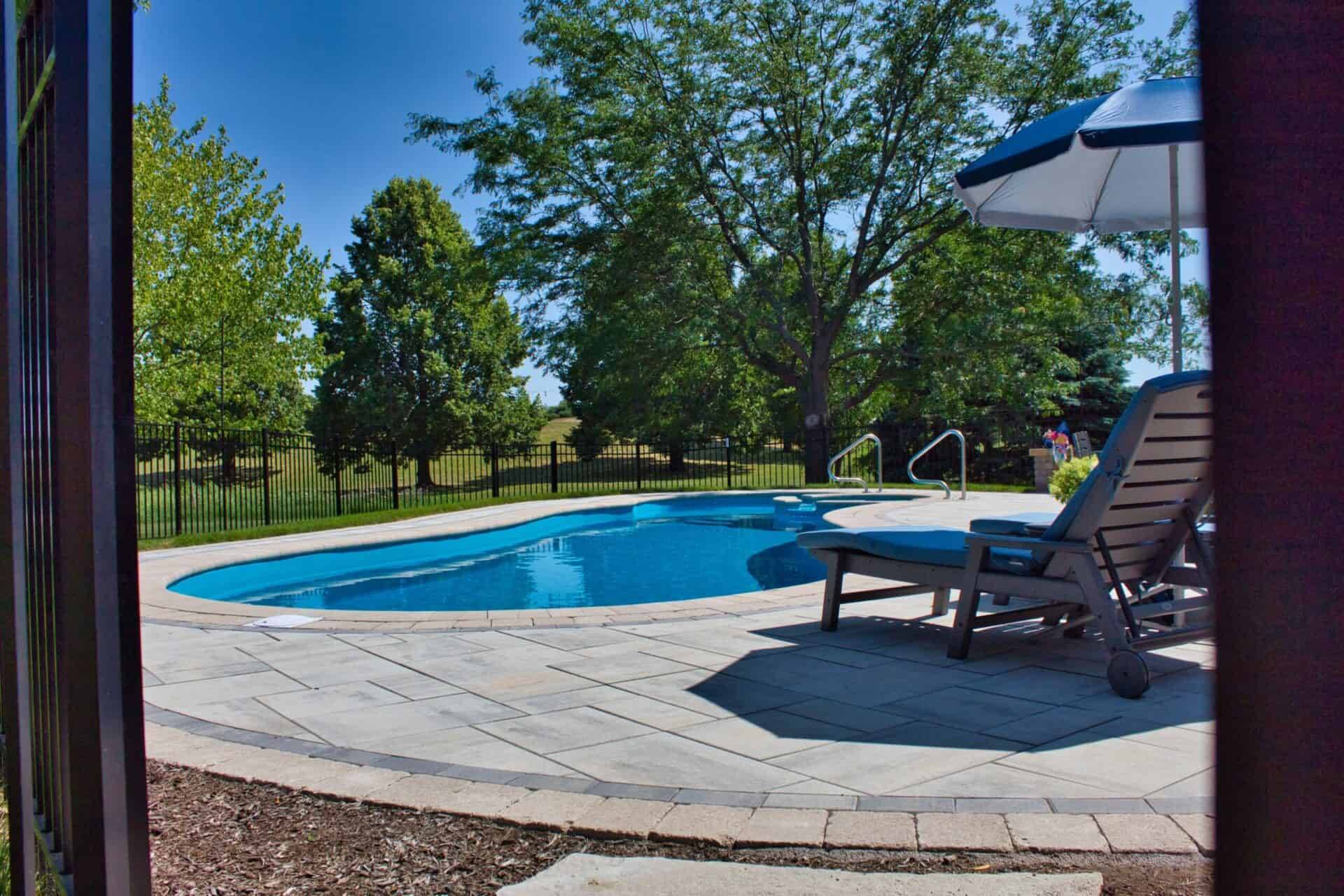
How large a share of pool operating costs is electricity?
Electricity is usually the largest single line in pool operating costs, and the pump sets it: size, age and daily run hours matter more than anything else on the equipment pad. A single-speed pump runs at full power whenever it is on. A variable-speed pump can run slower for longer, moving the same volume for far less energy, because the power a pump draws falls much faster than its speed does. ENERGY STAR's pool-pump guidance illustrates that relationship and gives a stated payback example for a certified pump, which is why an older pool with a single-speed pump usually has the most room to save.
Bob Vila (2024) budgets roughly $300 a month for pool electricity overall, while River Pools (updated 2026) puts a variable-speed pump system by itself at $30 to $80 a month, less than older single-speed pumps. The gap between those figures is the point: what you pay depends on which pump you own, how many hours it runs and whether a heater is drawing alongside it.
Automation and smart controls belong in this section because they act on run hours. A controller that schedules the pump for the hours it actually needs, and shuts the heater down when nobody is swimming, trims the energy line without changing any equipment. Automation is a cost lever, not a cost by itself, and it is cheapest to plan while the equipment pad is being designed.
What does seasonal opening and closing involve?
Opening is a sequence, not a switch: uncover, refill to the skimmer line, reconnect and prime the equipment, start the pump, then test and rebalance the chemistry before anyone swims. Closing runs the same list in reverse. The level is lowered below the skimmer, the lines are blown out and plugged so nothing trapped inside can freeze and crack them, the equipment is drained, a winterizing dose goes in, and the cover goes on. Skipping a step here is where a cheap fall becomes an expensive spring; a pipe split by ice costs far more than the closing would have.
These are distinct from daily upkeep because they happen once each and carry their own labor and supply cost. Bob Vila (2024) lists spring opening and cleaning at $375 to $500 and winterization at $350 to $650. Homeowners with the tools and the patience can do parts of this themselves; many hire a pool-service company for the blowout and the chemistry. Either way, budget for it as its own line rather than folding it into general maintenance.
Can a cover or saltwater system change the number?
A cover changes the number directly; a saltwater system changes how the sanitizer money is spent rather than whether it is spent. An uncovered pool loses heat and volume to evaporation every night. The U.S. Department of Energy names evaporation as the largest source of heat loss from an outdoor pool and cites a 50 to 70 percent heating-cost savings band when a cover is used consistently. A cover also cuts refills and slows chlorine loss, which is why it appears in nearly every guide to lowering running cost.
Saltwater is often described as a way to skip chlorine, and it is not. A salt chlorine generator makes chlorine from dissolved salt inside the plumbing. Pool Goods (2026) compares the two approaches as salt-generated chlorine versus manually dosed chlorine, each with its own startup cost and its own multi-year cost pattern, and it is explicit that a saltwater pool is not chlorine-free. The pool still needs testing, stabilizer and pH control, whichever system feeds it.
Stabilizer matters in both cases. Swim University explains that ultraviolet light degrades unstabilized chlorine, which is why cyanuric acid is added as a stabilizer. A pool that sits in full sun without it burns through chlorine faster and costs more to keep balanced.
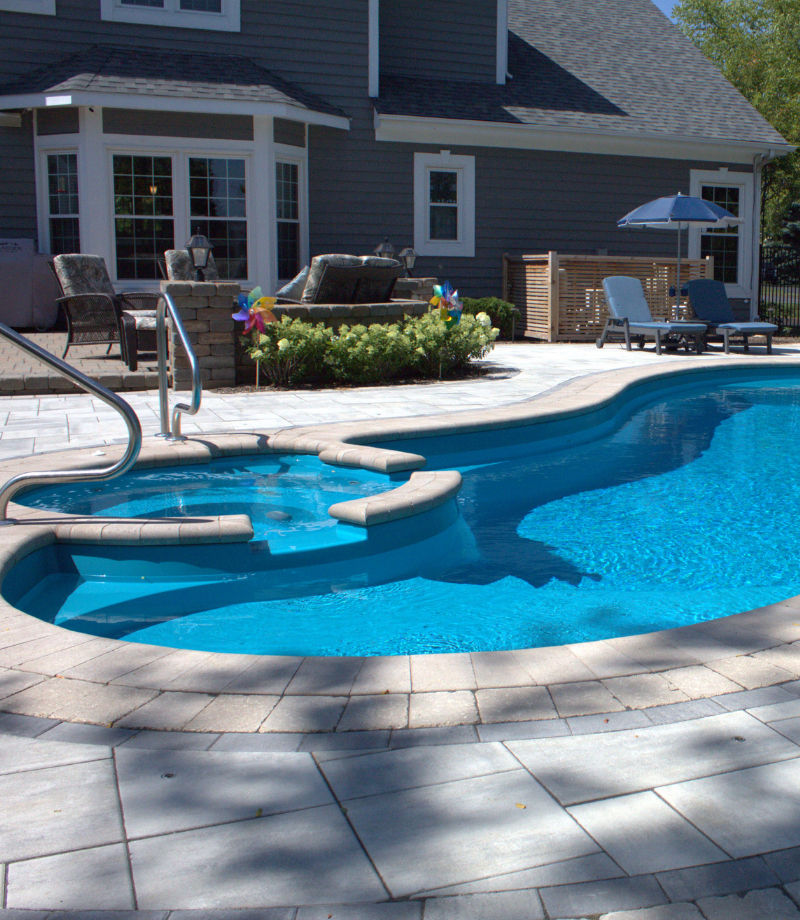
Does Illinois's climate change the annual swimming pool maintenance costs?
Illinois's climate changes annual swimming pool maintenance costs in both directions: a shorter outdoor season compresses the pump, sanitizer and refill lines into fewer months, while the cold adds a real closing and a real opening that a warm-climate owner may never pay for. In the Chicago northwest suburbs the daily lines accrue for part of the year rather than all of it, so a national annual figure overstates the everyday spend and understates the seasonal events.
Heating is the swing factor. Evenings cool quickly here even in midsummer, so a heated pool draws more energy per swim day than the same design would in a warm state, and a cover matters more than almost anywhere. Winterization is not optional: a pool left uncovered and unblown through a Mount Prospect January is a repair bill waiting for spring.
Pump age, cover use and heater use still decide where a household lands inside the national bands. Ask a local pool-service provider for a season-specific estimate rather than assuming a national average applies to a suburban Illinois yard.
How does running cost relate to what you pay to build?
Running cost is a separate budget from the build price, and both belong on the plan at the same time rather than in sequence. Equipment chosen at build time sets the running cost for years: a variable-speed pump, an automation controller, a heater sized to the gallonage and a cover are all decisions made on the plan, not afterward, and a pool builder who asks about them early is doing you a favor.
The main inground pool cost page is where the build side comes together, from the fiberglass or gunite shell to excavation, decking, fencing and utilities, and it explains how a consultation turns a Chicago-suburb project into a real number. Read the figures on this page as the second column next to that one, and you will walk into a design conversation knowing what the pool costs to own, not only what it costs to build.
Sources: Bob Vila (2024); River Pools (updated 2026); ENERGY STAR pool-pump guidance (undated, checked 2026); U.S. Department of Energy pool-cover guidance (undated, checked 2026); Swim University (undated, checked 2026); Pool Goods (2026)
Ready to price the whole pool project?
Running cost is one half of the picture. The main inground pool cost page covers the other half, from the shell to site work and features, and explains how a consultation turns that scope into a number for your yard.