Pool Cost Planning
Pool cost · Guide
Inground pool cost breakdown: what the shell price leaves out
The number a builder quotes for a pool shell is the beginning of a budget, not the end of one. This guide itemizes what sits outside that figure so you can price the whole pool project before you fall in love with a footprint.
An inground pool cost breakdown separates the shell price from excavation, utility rough-ins, decking, code-required fencing, permits and landscape restoration, which are typically priced as their own lines, with optional add-ons such as a heater or lighting on top.
What does the shell price include?
Ask the bidder to state what the shell price includes. Quotes can group the structure, equipment and site work differently, so compare the written inclusions before using a per-square-foot figure.
That is not a trick. The shell is the one part of the project a builder can price before seeing your lot, so it is the number that gets quoted early. Everything else depends on the site, which is why a line-item breakdown is the only way to see the real total, and why the hidden costs of an inground pool are rarely hidden at all once you know which lines to ask for.
Plan for excavation, access and utility work
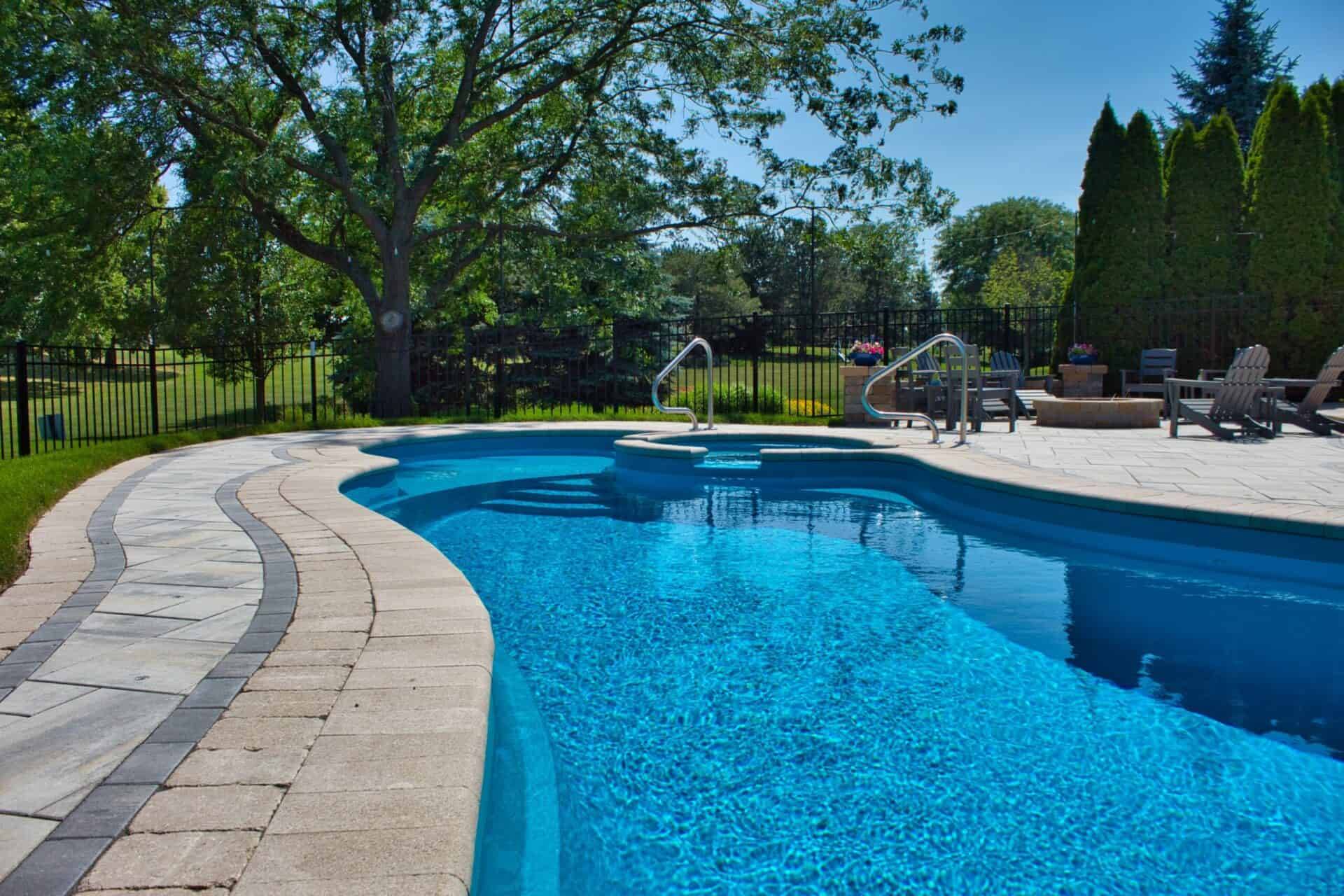
Excavation, access and utility work can appear as separate site-work lines. Ask each bidder to describe what is included, the assumptions behind those lines and how the sequence changes for the selected pool system and property.
Utility rough-in covers electrical service to the equipment pad and any lighting, a gas line if a gas heater is planned, and the plumbing that connects skimmers, returns and drains to the pump and filter. Each is its own trade and often its own permit. On a bid, look for these as separate lines; a shell price that is silent on utilities has left a real cost unstated.
What finishing line items come after?
Decking, the code-required barrier and landscape restoration are the finishing lines that follow the shell, and together they often decide whether the finished yard looks like a pool or like a construction site with water in it. Decking is the largest of the three and the one where material choice moves the budget most. A poured-concrete patio, concrete pavers, travertine and wood all carry different installed costs. HomeGuide publishes national planning ranges for poured-concrete patios and wood decks, and Stonorama (2026) compares travertine pavers against concrete pavers on material and installed cost. The square footage matters as much as the material: a deck that wraps the whole perimeter costs a multiple of an apron along one side.
Fencing is a separate line and not an optional one, since local codes in the Chicago suburbs require a compliant barrier around a pool and the current municipality controls the specifics. Fixr (2025) puts a typical pool fence project at $3,000 to $10,000, averaging about $6,500 nationally, priced by length and material. The pool-safety pages on this site go deeper on what the barrier must do; here the point is simply that it belongs on the bid.
Landscape restoration is the line most often forgotten. Excavators, concrete trucks and material deliveries cross the yard for weeks; when the equipment leaves, lawn, beds, irrigation and sometimes a driveway edge need to be repaired or redesigned. Ask whether restoration is in the bid or left to you.
Which optional add-ons move the number most?
A heater, lighting and automation on the equipment side, and a pergola or other poolscape structure on the site side, are the elective lines that push a project well beyond the shell price. A heater is the add-on with the longest reach, because it changes both the build cost and the running cost for years. Lighting and automation are smaller lines individually but are cheapest to install while trenches are open, which is why they should be decided at bid stage rather than added later. This Old House publishes national planning ranges for a pool heater and for lighting as separate line items, a useful reminder that they are exactly that: separate.
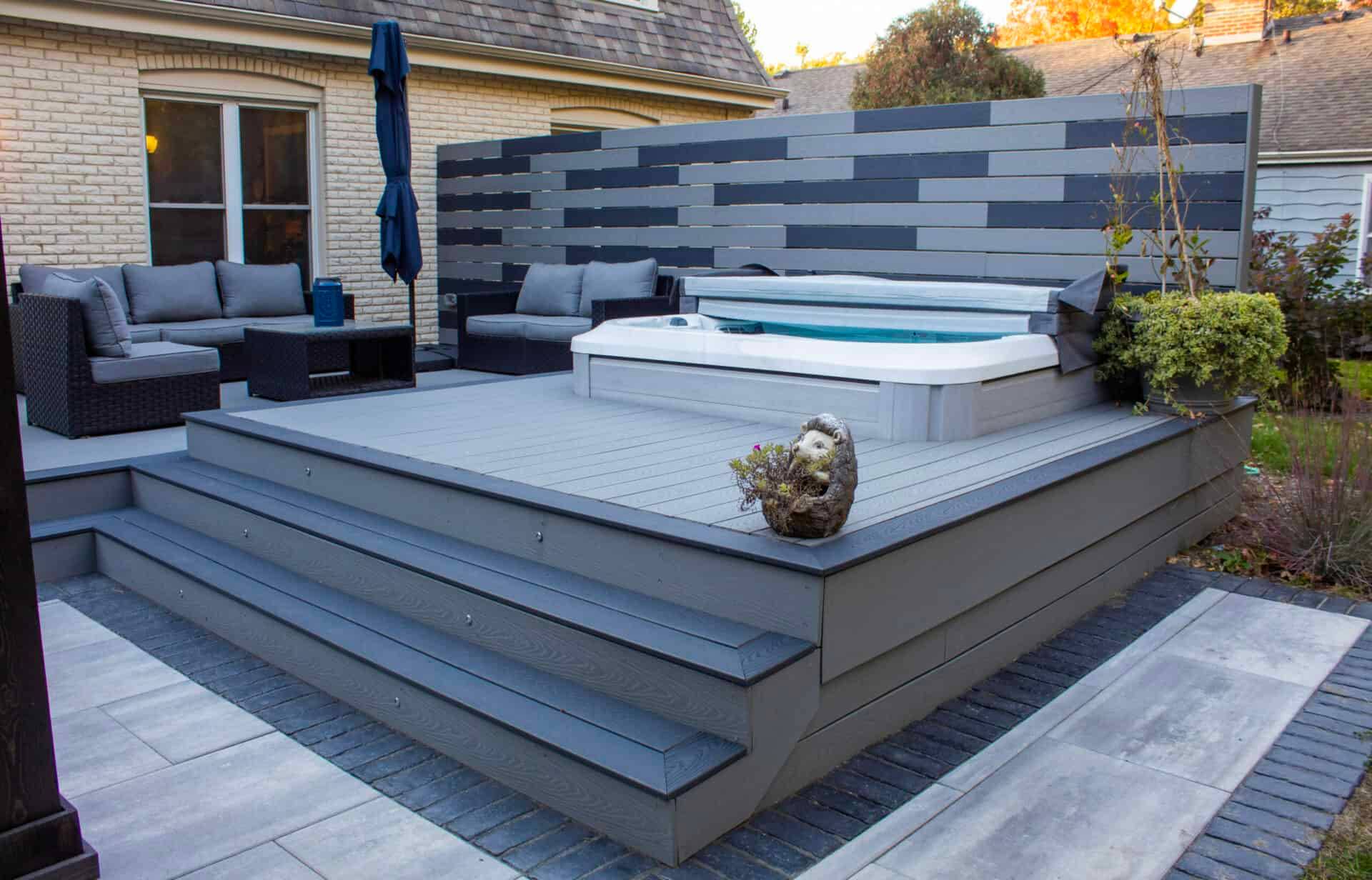
Poolscape structures are where a project can double in scope. A pergola, a pavilion, an outdoor kitchen, an integrated spa or a retaining wall to level a sloped lot are all legitimate parts of a finished pool environment and all priced independently of the pool. None belongs in a shell number, and none should surprise you on a final bid if you asked for the full list at the start.
How do Illinois permits fit into the breakdown?
Illinois permits fit into the breakdown as their own administrative line, covering permit fees, drawings and engineering where the village requires it, and the inspections that punctuate the build from excavation to final barrier. DirtMatch outlines the permit categories a pool project can touch: building, grading, electrical, plumbing and barrier. In the Chicago northwest suburbs those are issued and inspected by the village, and each village has its own forms, fees and sequence. A full-project bid prices the coordination of all of it; a build-only bid may leave permits to you, which is a legitimate arrangement as long as you know it is the arrangement.
Look for this line specifically when comparing bids. Permit handling is one of the clearest markers of the difference between a full-project scope and a build-only scope, and it is a difference in work, not just in price. A missing permit line is also where an unbudgeted fencing or electrical requirement tends to surface, because the inspector, not the bidder, is the one who finally reads the code.
Compare line items in the complete project budget
A complete project budget brings the quoted work, allowances and exclusions together. Ask how unforeseen site conditions and scope changes would be handled, then compare the total with the pool-cost planning guide.
Sources: Fixr (2025); HomeGuide deck versus patio guide (undated, checked 2026); Stonorama (2026); This Old House (undated, checked 2026); DirtMatch (undated, checked 2026)
Ready to see the whole project priced together?
The main inground pool cost page puts these line items back into one Chicago-suburb project number and explains how a consultation turns that scope into a figure for your yard.