Pool Safety
Pool Safety · Safety Covers
Pool safety covers chosen by documented fit, not broad category claims.
Compare mesh and solid candidates by certification, pool geometry, deck and anchor conditions, operation, care and current warranty terms.
A pool safety cover is one layer in the safety plan. Its documented certification, current municipal requirements and the site plan control the final decision.
Chicago's North Shore & Northwest Suburbs
Wave offers pool safety covers as part of its pool safety and security work. The useful first question is not “mesh or solid?” but “which documented product fits this pool, deck and safety plan?”
Mesh or solid
Mesh and solid cover labels do not settle the safety decision.
Mesh and solid labels describe different cover behavior. In Latham’s winter-cover range, mesh allows rain and melted snow to drain through; its solid example blocks sunlight, dirt, debris, and water and uses an integrated drain system. Match a selected cover to the pool shape, deck and coping, proposed anchors, opening and closing routine, care needs, and current warranty terms. A material label alone does not settle the project fit.
Compare the documented product against the pool's shape, the deck and coping, the proposed anchors, the expected opening and closing routine, and the current care and warranty terms.
CPSC Pool Safely describes barriers, covers, alarms and active supervision as complementary layers. A cover should be coordinated with the broader pool safety plan, not treated as a substitute for every other layer.
Standard to confirm
ASTM F1346-23 defines the active specification scope for safety covers. Product documentation and the site-specific safety plan still control the project.
Built alongside
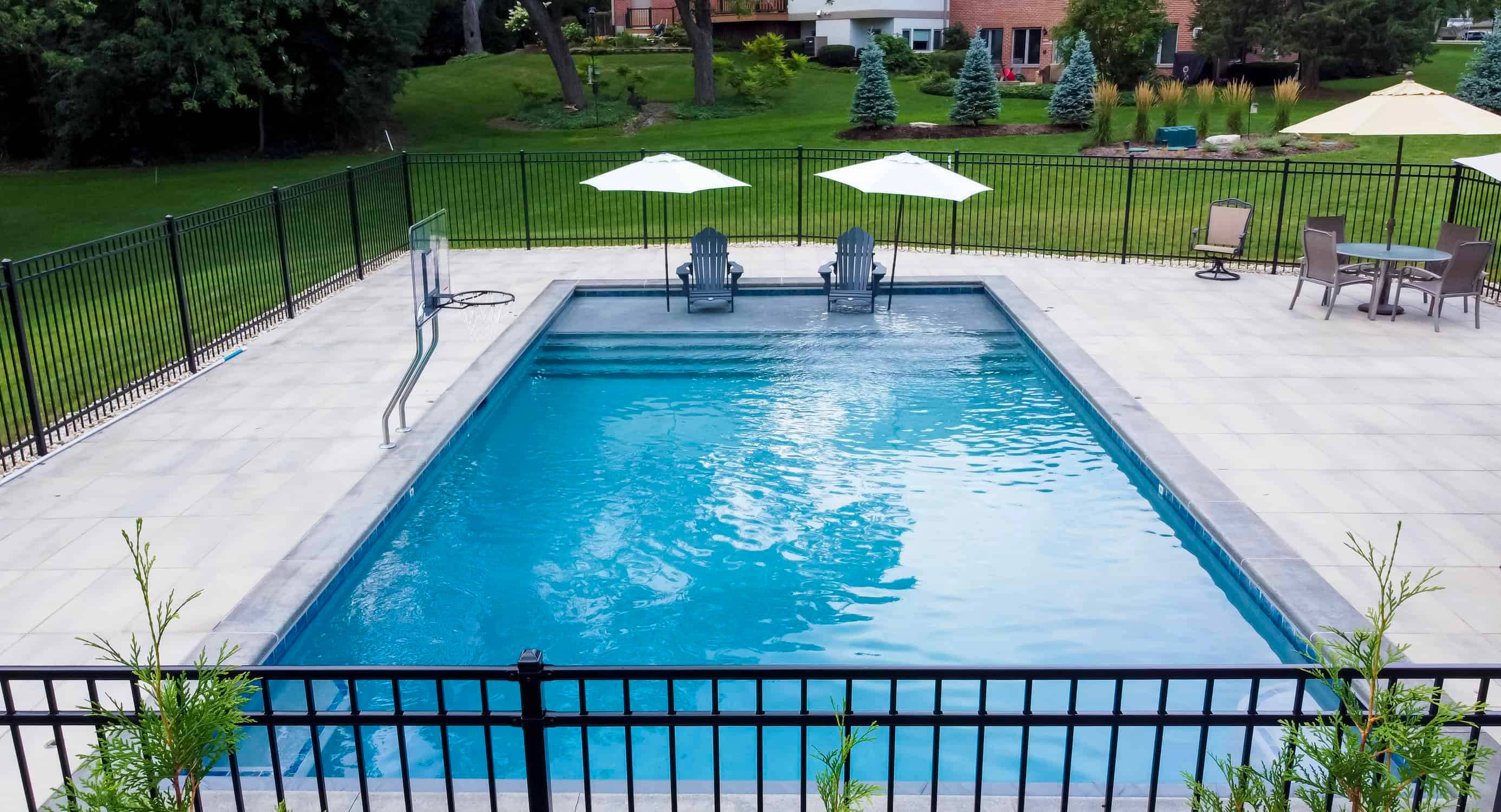
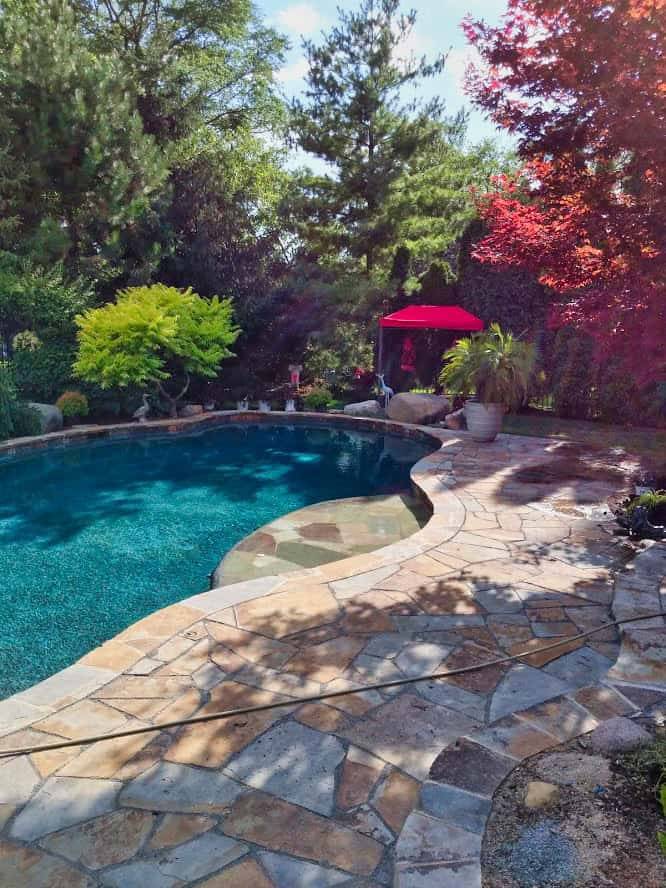
Pool coping and the surrounding deck influence the cover and anchor conversation.
| Decision | What to verify before selection |
|---|---|
| Certification and use | Confirm the current certification, intended use and limitations of each specific mesh or solid candidate. |
| Pool geometry | Check the shape, dimensions, raised elements and other conditions the cover must fit. |
| Deck and anchors | Review coping, deck material, clearances and the anchor approach required for this pool and deck. |
| Water and debris | Use the product documentation to compare water-management, debris and care requirements; do not infer them from mesh or solid alone. |
| Operation and ownership | Confirm how the cover is installed, opened, closed, stored and maintained, plus the current warranty terms. |
Planning the selected cover
The cover belongs on the plan before deck details are finalized.
Pool geometry, coping, deck material, anchors and clearances should be reviewed together. That coordination reduces late changes and keeps the chosen cover tied to the safety plan.
How it comes together
How a safety cover gets built into your project.
Design
Identify the role of the cover within the complete barrier, alarm and supervision plan.
Material selection
Compare specific mesh and solid candidates using current certification, instructions, care requirements and warranty terms.
Anchor and deck coordination
Resolve pool geometry, coping, deck material, clearances and the anchoring approach.
Installation and handoff
Review the installation, operation, storage and care information for the chosen cover.
Common questions
Pool safety cover questions, answered.
Ready to plan your safety cover into the design?
Bring the pool plan and the way you expect to use the cover; Wave can help narrow the product questions that belong in the project scope.